
Under discussion: The Tea Party Goes to Washington by Rand Paul with Jack Hunter, 272 pages, $21.99, Hardcover.
What is the Tea Party? Is it the refashioned conservative movement? Is it the reaction to a new liberal Democratic president? Or worst of all, is the Tea Party just a bunch of astroturfing-Fox News-watching-racist rednecks? In The Tea Party Goes to Washington, Kentucky senator Rand Paul begins to give us an answer.
The Tea Party, according to Senator Paul, is a reaction to the big spending of Washington and a desire to curtail the power of the federal government. The trouble, or virtue, of a movement without a central hierarchy is that there is no unified message or platform. There have been a few attempts to present an official Tea Party message but A Tea Party Manifesto and That’s No Angry Mob – That’s My Mom are mostly relegated to the bargain shelf at Borders.
If there is a difference between earlier attempts at a Tea Party synthesis and Rand Paul’s it's that the current volume is attached to the platform of a victorious candidate. Since winning, Marco Rubio has shunned the Tea Party label he rode to election, exposing himself as the Bush family agent that he always was, while Tea Party losers Joe Miller, Christine O’Donnell, and Sharron Angle are already largely forgotten. So without the competing versions, the Rand Paul incarnation of the Tea Party shines brighter. And considering the contents of The Tea Party Goes to Washington, it’s sure to ruffle the feathers of anyone who would like to see the Tea Party either go away or be co-opted by the Republican Party altogether.
A note is needed first on the aesthetics of the book. The cover art depicts the Capitol Dome being squeezed by a belt, indicative of the diet Washington needs. But what’s most intriguing about the cover is what’s not there: a picture of the author himself. Mitt Romney, Sarah Palin, Mike Huckabee, and Newt Gingrich – all presidential contenders – all adorn the covers of their books.
Nor is this unique to politicians. Talk show hosts Mark Levin, Sean Hannity, Keith Olbermann, and Chris Matthews all have their mugs defacing the covers of their books. This is no coincidence. Most of the people hawking books are not actually interested in ideas but only in advancing themselves. Will someone tell me what would be the primary difference between a Huckabee candidacy and a Romney one? What’s in Sean Hannity’s book that’s not in Mark Levin’s? The difference is only in personality and style. The fact that Senator Paul is absent from the front cover (although not the back where he is pictured with his smiling wife) indicates that the book is more about his ideas than about himself personally.
The book itself is charming because it is part autobiography and part agenda. Facing the first page of every chapter is a photo, including pictures from the senator’s childhood as Ron Paul’s son and several with his own family from the campaign trail. While these images and stories from the campaign and his life are affectionate and reinforce the already-present human side of Rand Paul, the most lasting impression in the book is how radical it is. Radical not in the sense that the senator should fear being dragged before Peter King’s inquisition, but radical in how there are real ideas in the book and not shallow talking points.
This radicalism is evident even before the first page of the text. Rand Paul’s selection of a co-author is Jack Hunter, a so-far obscure South Carolina columnist and radio commentator known to many by his alias, The Southern Avenger. This choice of co-author is remarkable because Hunter, a veteran of both the Ron Paul Revolution and the Buchanan Brigades, proto-Tea Party movements, had, like Rand Paul, also never written a book. It is not for nothing that Rand Paul’s collaborator was not an accomplished ghost writer but an authentic voice of the grassroots Right.
The fingerprints of the co-author are everywhere to be found. Chapter 3, “Equal Parts Chastisement, Republicans and Democrats” is vintage Jack Hunter, including a brief introduction to the neoconservatives and treatment of Fred Barnes’ sycophantic 2003 Wall Street Journal article “Big Government Conservatism” where the Weekly Standard veteran condoned and justified George W. Bush’s growth of government. Rand Paul sees the disconnect among Republicans who took this sort of blind eye to the Republican Bush’s growth but are enraged by the Democrat Obama’s growth. “Consider this – what kind of person would talk about how badly the neighbors’ kids behave while ignoring the bad behavior of their own children?” (62) is a phrase Mr. Hunter’s listeners have heard a time or two.
Not to be outdone, Rand Paul reminds Democrats that they are just as guilty of looking the other way when their man does the same crime:
“Contrary to his supporters’ belief, Obama’s agenda has not been a reversal of Bush’s agenda but an extension of it, only more ambitious in scope and even more reckless in spending. Amazingly, and perhaps ironically, even on the issues that once animated the Left against the Republicans – prolonged war, civil liberties infringements, the further empowerment of the executive branch – Obama has basically maintained the same policies as his predecessor, and in some cases has expanded them.” (59)
And this was before Obama reinstituted indefinite detention at Guantanamo Bay. One wonders if waterboarding will be next.
But nowhere is the radicalism more evident than in Chapter 7, “A Conservative Foreign Policy,” and nowhere else is it more evident that Rand Paul is indeed his father’s son.
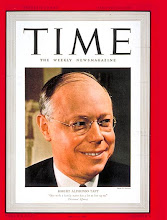
In this important chapter, the reader is treated to discussions of the neoconservative influence on foreign policy, the long-forgotten Senator Robert Taft, and a call to end nation-building.
Outside of the often insular conservative movement, there is scant attention or even acknowledgement of the existence of the neoconservatives and to find a discussion of this sect of interlopers in a U.S. senator’s book is more than just a breath of fresh air – it is a torrent, especially when there are phrases peppered in like “a Republican Party tainted by neoconservative ideology.”
The importance of the issues discussed in this chapter have been brought up before in Ron Paul’s books and more academic treatises, but the blessing in Rand Paul’s book is that he makes arguments that got his father booed without incurring the same wrath himself. In other words, Rand Paul takes foreign policy, an issue on which there was no allowable dissent during the Bush years, and presents it in a way that can be accepted by conservatives:
“The great irony is that conservatives preach individual responsibility and reliance domestically but practice policies abroad that create dependence on foreign aid and dependence on foreign soldiers. Where conservatives will ask the domestically unemployed to seek work and become independent of government welfare, abroad we let nations depend on our succor. We don’t demand the same self-reliance internationally that we do domestically.” (131-132)
If there are a couple of faults with The Tea Party Goes to Washington they have to do with the frequent references to his father. Littered throughout the text are phrases like “My father always says . . .” or “My dad believes . . .” but these are only slightly distracting. This is not necessarily Rand Paul’s fault – it just proves he came from a stable home and his father was obviously around enough to influence him – but this may expose the younger Paul to criticism among the uneducated that he is just a clone of his father.
There were also a couple of minor historical errors regarding years. On page 144, Gerald Ford is referred to as the moderate candidate for president in 1974, the year Ford ascended to the presidency, not the year he was a candidate for president, which was 1976. Then on page 154, Neville Chamberlain is said to have signed a peace treaty with Germany in 1939, the “appeasement” of Hitler. The author is probably thinking about the Munich Agreement which was in 1938.
The Tea Party Goes to Washington, with over four pages of recommended books and websites at the end, is undeniably a book about not just ideas, but fresh ideas. The Republican establishment did its best to wall Rand Paul out of the U.S. Senate during the 2010 primary, in much the same way they did to his father at the 2008 Republican National Convention, a sleight that does not go unnoticed by the son.
It's easy to see why.



 Posts
Posts


