If there is one reason people are considering supporting former Massachusetts governor Mitt Romney for president, it's because he's considered "electable," meaning he has a fair shot to defeat President Obama in 2012.
If there was one thing that hampered Romney's 2008 campaign it was the perception that he was a flip-flopper, a role which earned him the nickname "Multiple Choice Mitt."
While trying to present himself as a conservative, and even winning the endorsement of National Review, Romney was dogged by a very recent and probably very politically calculated switch from pro-choice on abortion to pro-life. This from a man who minced no words in assuring Massachusetts voters during a 2002 gubernatorial debate that he would "preserve and protect a woman's right to choose."
A more pressing issue for the 2012 presidential primaries is the national health care scheme passed by the last Congress. The plan that served as the model for Obamacare infamously bears the signature of Governor Mitt Romney.
Knowing that the Republican nominee in 2012 will have to campaign against Obama's landmark achievement, the president must be licking his lips knowing that a likely opponent of his will have to contort himself in an attempt to effectively campaign against himself. Voters would be sure to be reminded of another Massachusetts presidential candidate who also voted for something before he voted against it.
As of this writing, there is speculation that real estate mogul and reality TV star Donald Trump is running for president. Considering that a reality TV star may be a presidential contender should tell us that the line between reality and fantasy is already blurred.
Like Romney, Trump had always been pro-choice until he thought about running for president. Now "The Donald," a philandering, casino-running, beauty pageant-owning egomaniac has gotten religion. Doing an interview for the Christian Broadcasting Network, one that looks more like The Onion than anything else, Trump is now telling us how much he loves the Bible, how much he loves sending people Bibles, and how great it is going to church.
So now it appears that Trump is doing what Romney has done for years, trying to convince us that he is not what he has always been: an empty suit who will say anything to advance himself.
Last week, a few reports surfaced on the Drudge Report where Trump, on separate occasions, labeled both George W. Bush and Obama has "the worst president ever."
Shortly after the 2008 presidential election, Trump called Bush "evil" and even though he supported John McCain, he felt comfortable with President-elect Obama because he would govern by "consensus" and not rush off to war in a bull-headed manner like Bush. On the one hand, this may only mean that Trump was one among millions snookered by the smooth rhetoric of candidate Obama. But on the other hand, one has to wonder, if Trump believed Bush was bull-headed and rash in going to war, what had he ever seen in McCain's character and temperament that led him to believe the Arizona Republican would have been any different?
Even though Trump has traditionally supported Democrats and before he supported McCain, he preferred Hillary Clinton, which might give us a clue about how "The Donald" feels about government-run health care.
Like much of the current appeal of a Romney candidacy, the reason conservatives seem to be giving for supporting Trump is that he has a chance to beat Obama.
But if Republicans choose Trump, what does that say?
It means that after a lifetime of supporting Democrats and Democratic causes, all a celebrity like Trump has to do is start saying a few of the right things and he suddenly has conservative bona fides.
Are Republicans and conservatives so eager to make a Faustian Bargain to regain control of the White House that anyone, regardless of all the evidence against them, will do so long as they read the right lines?
Time will tell.
Showing posts with label conservatism. Show all posts
Showing posts with label conservatism. Show all posts
Thursday, April 21, 2011


Tuesday, November 2, 2010
Know Nothing Party

How things have changed in two short years.*
In November 2008 we were told conservatism was dead and the Republican Party was on its way to Whig status. Ragin' Cajun James Carville boastfully predicted 40 years of Democratic governance.
Maybe not.
Now conservatism is in an ascendancy. The Republicans are back and have learned that the reason they were fired in the first place was because of all that spending. Now that Republicans are back in the House, they can get to work on repealing Obamacare, privatizing Social Security, and ending the welfare state.
Maybe not.
For all the chatter, there isn't anything even broadly revolutionary about this election. There might be a few upsets and a few unapproved candidates might survive running the gauntlet, but this Republican Congress will likely resemble the ones that disappointed from 1994-2006.
The mistake made by rose-spectacled Republicans comes in thinking that a change of majority parties makes much of a difference beyond the name plates and seating arrangements.
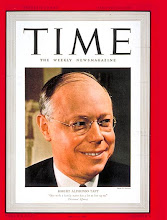
Time magazine just put "Party Crashers" Rand Paul, Christine O'Donnell, Marco Rubio, and Meg Whitman on its election issue cover. That Bush Republican Marco Rubio and former eBay CEO and billionaire Meg Whitman are somehow considered "a new breed of Republicans" tells us enough about what is considered "Tea Party" these days.
Too much buzzkill?
The first reason for skepticism is that there has not been a serious philosophical shift, nay even a debate within the GOP.
One might argue that support for the bank bailouts or President Obama's stimulus became a litmus test since it resulted in the scalp of Bob Bennett and the defection of Arlen Specter. But that anyone can support the promotion to Speaker of the House for bailout leader John Boehner suggests that the party leadership won't have to pay for their sins.
The one issue that got Republicans kicked out in the first place, foreign policy and the disastrous experiments in Middle Eastern nation-building, has been a non-issue in this election cycle.
Republicans have convinced themselves and probably convinced a lot of voters that the real reason they got booted was because they spent too much. The party's recent emphasis on economic issues would be a step in the right direction if it was rooted in anything besides partisanship. Like the kid who got spanked for sticking his hand in the cookie jar, these Republicans are only sorry they got caught.
Secondly, there is nothing in this election to suggest confidence in Republicans -- only that Democrats failed and voters had nowhere else to turn.
Republican victories this year are also consistent with historical precedent. In America's duopoly, the ruling party traditionally loses big in the first midterm. One party fails and the other one gets their chance to do . . . something.
In 1954, during Dwight Eisenhower's first term as president and the first such Republican in 20 years, the GOP lost 18 seats in the House. Reagan's Republicans got routed in 1982 while the economy was still sour. Bill Clinton had large majorities in Congress in 1994 before losing a whopping 54 seats. With the memory of 9/11 still fresh, George W. Bush's GOP temporarily broke the trend by adding 8 seats at midterm.
Since the Republicans have gone into exile, there has been no urgency to address issues. Republican identity for the past two years has been wrapped up in opposition to the Democratic president. It's not because he's black. It's because he's a Democrat.
The new Republican ascendance has nothing to do with a re-birth of conservatism or faith in the GOP and everything to do with a Democratic ruling majority that didn't delivery what it promised despite overwhelming majorities.
The Republicans' position as the majority party in Congress doesn't preclude them from relinquishing their title as the Party of No. They can still oppose President Obama at every turn for the next two years but that won't mean they stand for anything.
The Republican Party doesn't need to be restored to power. It needs some fresh ideas and new leaders.
And if Barack Obama can defy conventional wisdom and make a Clintonian move to the Center, who will he and the rest of us have to thank for providing no genuine alternative?
Thursday, September 2, 2010
That Rally

If there is any question about the status of the conservative movement, it could be found in Glenn Beck’s “Restoring Honor” rally: it is as alive and kicking as Ronald Reagan himself.
Too soon?
Either way, despite estimates of hundreds of thousands attending Beck’s rally last Saturday, there was nothing on display to imply that American conservatism has any long-term usefulness.
More than anything, it showed the triumph of liberalism over everything in the country, even the purported conservative movement itself.
Heeding criticism that the rally could only be political in nature, the Mormon Beck made it about “god.” Only keynote speaker Sarah Palin, whose presence was derided as proof that the event would just be a Republican rally, treaded into the political muck.
The insufferable opening prayer, led by a supposed descendent of Mayflower passengers, alongside a rabbi and supposed descendents of the Indians er, Native Americans at Plymouth Rock, included a petition about Quaker William Penn and this beauty:
“And you, O God, called us to repentance when we did not live up to our creed, and we did not treat everyone as equal. But Lord, we found out that you are a God of forgiveness, you are a God of covenant, you are a God of restoration, you are a God of healing and you have healed us.”
I’m no professional theologian, but if I understand that correctly, Americans didn’t learn about the forgiveness of God by reading the Bible’s account of Christ’s sacrificial death but only after we had enslaved the blacks and broken our treaties with the Ind-. . . Native Americans. Was this conservative Christianity or the liberal gods of collective guilt and multiculturalism?
This display of multiculturalism isn’t new and it isn’t even unique for Beck. In May, the radio and TV host dedicated one of his “Founders Fridays” programs to the forgotten black founders, a pathetic display of unwatchable political correctness.
That so many conservatives lap up this god constructed in the image of America only proves that the liberals have won the race card war. Or as James Edwards says at Alternative Right:
“. . . a conservative movement as willingly impotent as the crowd that came to DC on Saturday can’t go on much longer. At some point it’s going to dawn on them that no matter how much they grovel to MLK and praise his holy name, or how many ‘conservative’ imams they pack their podium with, they still get called racists and Nazis, and their country just keeps slipping further down the tubes.”
So what was the point of this event? Did we restore honor? Did we worship the god of our imaginations? Has anyone bothered to ask how ironic was it that someone like Beck, who is calling for an end to big government, chose to have his event at the Lincoln Memorial, a monument to a man who knew a thing or two about centralization?
A better question, one that should have been asked, is what the Republicans will do after the November midterm elections, where they are poised to either retake the House or at least make inroads.
The clarion call of the Tea Party over the past year has been “Cut spending!” The right course to be sure, but Pat Buchanan asks what cutting spending really means:
“Where are the victorious tea party Republicans going to cut?
“According to USA Today, 50 million Americans are on Medicaid, and perhaps an equal number on Medicare and Social Security. Which of these three will tea party Republicans cut, when Republicans are already denying Democratic charges that they plan to raise the retirement age for Social Security? . . .
“Are Republicans going to go after other entitlements — veterans benefits, earned income tax credits, food stamps — which now go to 41 million Americans, or unemployment benefits that run for 99 weeks?
“The big remaining items in the budget are interest on the debt, which must be paid, and war and defense. But Republicans are more likely to be supportive of Obama’s rebuilding a military ravaged by war, and staying the course in Iraq and Afghanistan, than are Democrats.
“Obama’s budget commission will surely come in with tax increases on personal incomes, perhaps also for Social Security and Medicare. But the GOP cannot sign on to these and go home again.”
The Republicans only stand to benefit from an event like Beck’s “Restoring Honor,” an event celebrating America’s civil religion, one that obviously resounds with the Republican base.
The only question is how long it will take for conservatives and Tea Partiers to realize that to “restore honor” or restore the republic for that matter, will take more than a few hours of feel-good entertainment and self-indulgence.
It will require hard questions like those above as well as a healthy dose of willpower.
If not, “honor” will only be an afterthought.
Monday, May 24, 2010
The Smear Bund Reloads
“I don’t like the idea of telling private business owners - I abhor racism, I think it’s a bad business decision to ever exclude anybody from your restaurant - but at the same time I do believe in private ownership but I think there should be absolutely no discrimination in anything that gets any public funding.”
- Rand Paul, May 20, 2010
Fresh off a resounding primary win, Rand Paul didn’t leave himself much time for a “honeymoon” this week when he inadvertently uttered one of the Things You’re Not Allowed To Say.
Just what did he say? Did he espouse the merits of racism? Did he lament that the country did not elect Strom Thurmond’s Dixiecrats in 1948? Did our good and benevolent media handlers, who cannot possibly have an agenda of their own, catch Rand changing out of his surgical scrubs and into his Klan hood?
Rather, Rand Paul made a statement intolerable to our political and cultural elites when he suggested that the Civil Rights Act of 1964 was not infallible.
In fact, there was nothing in the above quote that was even inconsistent with his philosophy.
Rand Paul’s entire campaign thus far has been about keeping government out of the lives of private citizens. Do the liberals (and a conservative establishment altogether unhappy with this marriage) want us to believe that Rand’s whole campaign, nay, whole life dedicated to preserving the privacy and rights of the individual was just part of a grand scheme to reinstitute segregated lunch counters?
It wasn’t enough to say that racism is wrong. It wasn’t enough to point out the economic stupidity inherent to discrimination practiced by business owners. Rand Paul’s detractors, both Left and Right, show us that the only acceptable way to be absolved or recused of racism is to faithfully recite the court history.
Always tenuous in his relationship with the Republican Party, whose full support he needs, a chastened Dr. Paul, with all the passion of a church heretic choosing expediency over burning at the steak, has backpedaled by saying that he would have undoubtedly supported the Civil Rights Act, a position he implied in the first place. Perhaps now that he says he believes all the articles of the government catechism, the Inquisition of Acceptable Opinion will pull back on the reins.
But this is unlikely to end as this is only the second act of a play we’ve already seen.
The Democrats have naturally lacerated Rand. They are loathe to ever pass up an opportunity to project their bloated sense of moral superiority at anyone who disagrees with them by labeling them a racist or bigot. Perhaps even less surprising is how the GOP has turned its back and tepidly cheered on the Left’s hysterics.
The Republicans, who are none too happy that Rand pummeled their candidate of choice, finally have a reason to throw him to the wolves. For a candidate whom they have no passionate attachment, cutting the rope comes naturally and easily. Therefore, it is unsurprising that the party who left Jim Bunning to twist in the wind has given the same treatment to his potential successor.
While there is a fair amount of criticism about Rand Paul’s campaign, particularly among libertarians, that he is so reviled by his party’s establishment, both before and after a landslide primary victory, shows that his enemies still see him as a legitimate threat to cut against the grain of his party. And that is what cannot be tolerated.
Despite all of this, it’s still doubtful this will sink the 25-point lead Rand currently holds over his opponent. Try as they might, the Democrats cannot put “macaca” in his mouth.
But Rand Paul has been here before.
Last December, a prominent staffer resigned when racist content was found on his myspace.com page. Although the staffer, Chris Hightower, did not author the substance, he did leave it alone, an indication that he values a person’s right to the freedom of speech, even when it’s detestable.
Likewise, Rand Paul never condoned racism or discrimination but only nodded that property rights are sacred in the western tradition, even when the holders themselves are repulsive.
But the point is that Rand Paul has survived this sort of controversy before. He kept on his message of rejecting government interference and balancing the budget, even when his primary opponent tried to use this incident as a club in evidence of Rand’s “strange ideas.”
Yet, Rand Paul is still naturally strong in this race. He’s the indisputably conservative candidate in an indisputably conservative state.
“Gotcha” questions like these will come up again. The successful distraction caused by this kerfuffle only proves that it will come up again because the more time we spend talking about 46-year-old legislation that is not about to be repealed means there will be less time to talk about dangerously inflated budgets that are sinking the economy.
Rand Paul needs to get together with his team to prepare for every possible contingency because the next irrelevant question is already being cooked up.
Otherwise, damage control will have to be added to his list of talking points.
*
Here are a few other takes on this situation that are worth a read:
Tom Woods: Rand Paul and the Zombies
Jack Hunter: Rand Paul's Practical Philosophy
Daniel McCarthy: Rand Paul and the Paleos
Daniel Larison: Can Rand Paul Revive Conservative Foreign Policy?
Jacob Hornberger: Rand Paul, Civil Rights, and More Liberal Hypocrisy on Race
Michael Scheuer: Maddow and the Obamas: Killers of Hope, Spurs of Rebellion
Wes Messamore: A Question for Rachel Maddow
Chris W: Progressive Hypocrisy and Rand Paul
**
This essay is also now up at The Humble Libertarian.
- Rand Paul, May 20, 2010
Fresh off a resounding primary win, Rand Paul didn’t leave himself much time for a “honeymoon” this week when he inadvertently uttered one of the Things You’re Not Allowed To Say.
Just what did he say? Did he espouse the merits of racism? Did he lament that the country did not elect Strom Thurmond’s Dixiecrats in 1948? Did our good and benevolent media handlers, who cannot possibly have an agenda of their own, catch Rand changing out of his surgical scrubs and into his Klan hood?
Rather, Rand Paul made a statement intolerable to our political and cultural elites when he suggested that the Civil Rights Act of 1964 was not infallible.
In fact, there was nothing in the above quote that was even inconsistent with his philosophy.
Rand Paul’s entire campaign thus far has been about keeping government out of the lives of private citizens. Do the liberals (and a conservative establishment altogether unhappy with this marriage) want us to believe that Rand’s whole campaign, nay, whole life dedicated to preserving the privacy and rights of the individual was just part of a grand scheme to reinstitute segregated lunch counters?
It wasn’t enough to say that racism is wrong. It wasn’t enough to point out the economic stupidity inherent to discrimination practiced by business owners. Rand Paul’s detractors, both Left and Right, show us that the only acceptable way to be absolved or recused of racism is to faithfully recite the court history.
Always tenuous in his relationship with the Republican Party, whose full support he needs, a chastened Dr. Paul, with all the passion of a church heretic choosing expediency over burning at the steak, has backpedaled by saying that he would have undoubtedly supported the Civil Rights Act, a position he implied in the first place. Perhaps now that he says he believes all the articles of the government catechism, the Inquisition of Acceptable Opinion will pull back on the reins.
But this is unlikely to end as this is only the second act of a play we’ve already seen.
The Democrats have naturally lacerated Rand. They are loathe to ever pass up an opportunity to project their bloated sense of moral superiority at anyone who disagrees with them by labeling them a racist or bigot. Perhaps even less surprising is how the GOP has turned its back and tepidly cheered on the Left’s hysterics.
The Republicans, who are none too happy that Rand pummeled their candidate of choice, finally have a reason to throw him to the wolves. For a candidate whom they have no passionate attachment, cutting the rope comes naturally and easily. Therefore, it is unsurprising that the party who left Jim Bunning to twist in the wind has given the same treatment to his potential successor.
While there is a fair amount of criticism about Rand Paul’s campaign, particularly among libertarians, that he is so reviled by his party’s establishment, both before and after a landslide primary victory, shows that his enemies still see him as a legitimate threat to cut against the grain of his party. And that is what cannot be tolerated.
Despite all of this, it’s still doubtful this will sink the 25-point lead Rand currently holds over his opponent. Try as they might, the Democrats cannot put “macaca” in his mouth.
But Rand Paul has been here before.
Last December, a prominent staffer resigned when racist content was found on his myspace.com page. Although the staffer, Chris Hightower, did not author the substance, he did leave it alone, an indication that he values a person’s right to the freedom of speech, even when it’s detestable.
Likewise, Rand Paul never condoned racism or discrimination but only nodded that property rights are sacred in the western tradition, even when the holders themselves are repulsive.
But the point is that Rand Paul has survived this sort of controversy before. He kept on his message of rejecting government interference and balancing the budget, even when his primary opponent tried to use this incident as a club in evidence of Rand’s “strange ideas.”
Yet, Rand Paul is still naturally strong in this race. He’s the indisputably conservative candidate in an indisputably conservative state.
“Gotcha” questions like these will come up again. The successful distraction caused by this kerfuffle only proves that it will come up again because the more time we spend talking about 46-year-old legislation that is not about to be repealed means there will be less time to talk about dangerously inflated budgets that are sinking the economy.
Rand Paul needs to get together with his team to prepare for every possible contingency because the next irrelevant question is already being cooked up.
Otherwise, damage control will have to be added to his list of talking points.
*
Here are a few other takes on this situation that are worth a read:
Tom Woods: Rand Paul and the Zombies
Jack Hunter: Rand Paul's Practical Philosophy
Daniel McCarthy: Rand Paul and the Paleos
Daniel Larison: Can Rand Paul Revive Conservative Foreign Policy?
Jacob Hornberger: Rand Paul, Civil Rights, and More Liberal Hypocrisy on Race
Michael Scheuer: Maddow and the Obamas: Killers of Hope, Spurs of Rebellion
Wes Messamore: A Question for Rachel Maddow
Chris W: Progressive Hypocrisy and Rand Paul
**
This essay is also now up at The Humble Libertarian.
Monday, January 18, 2010
Fooling the Tea Parties
With the special election to fill the late Ted Kennedy’s senate seat approaching, there is a lot of speculation that Republican Scott Brown’s potential victory in the Bay State may be a sign of things to come for the GOP. Brown, who spouts conservative-sounding rhetoric in the liberal commonwealth, is even being presented as proof that the Tea Party movement is making real strides, nudging the Republican Party to the Right, even in states like Massachusetts where the candidate of the Right might just prevail.
Browsing Scott Brown’s campaign website shows that the candidate doesn’t deviate from safe GOP positions. He’s for tax cuts but says little about spending cuts. He is wishy-washy on abortion, but On the Issues records that as of 2002, Brown felt that “abortions should always be legally available.” His policy positions on Israel and Iran fall in line with those of the Israel Lobby and should make Dick Cheney and the rest of the gang at the American Enterprise Institute happy that a Senator Brown would represent the Republican status quo on foreign policy. As bloggers Carla Howell and Michael Cloud discovered, Scott Brown in practice has proven himself to be the archetypal big government Republican in a blue state.
This makes Scott Brown January 2010’s Doug Hoffman. Hoffman, who ran on the Conservative Party of New York ticket in the special election for New York’s 23rd district in November 2009, was the unofficial Tea Party candidate and generated mounds of enthusiasm among the Tea Partiers, even though he was vague on issues and the ones he did articulate upon were well within the GOP mainstream.
So despite polls showing the Tea Party Movement more favorable than the Republicans, the Tea Party Express’ endorsement of Brown is proof-positive that no matter how bitter they may appear to be at Republicans, the Tea Parties are expected to return to the Republican fold on Election Day. Their support for Brown over the much more libertarian (and unrelated) Joe Kennedy also demonstrates that, so far, the Tea Party movement is not serious about challenging the Republican Party, even from the inside out.
Here’s why. On his Friday radio program, Rush Limbaugh addressed the issue of a third party, an issue that arose during the 2008 presidential campaign, while conservatives were dragging their feet for John McCain:
“[A] Third party, in my view, is the only effort that will derail all the progress and energy and early victories that we've seen in recent months. A third party of the Ross Perot type, the Ron Paul type, bleeds voters away from the Republican Party, not the Democrat Party. . . . The fact that every single Republican senator votes consistently against government-run health care should be a clear indication that we are being heard. The fact that all but one Republican in the House voted against it, does this mean conservatives run the GOP? No. Not yet. But it means we're making progress. It means we're in an ascendancy. . . . And we've gotta stop this third-party temptation. It will only bleed votes from our side.”
“Bleed votes from our side.”
Beneath the surface, this means that despite pleas to the contrary, Rush Limbaugh is a Republican first and a conservative last. A Republican Party that does not have its conservative act together is better than a third party that does. This is why the conservatives who compose the Tea Party movement must finally reject the Republican Party and their faux conservative hand servants or else overhaul them all.
Not doing so is like saying, “Look, I know the Republican Party isn’t perfect, but if we don’t elect Republicans, it’ll be worse. Plus, now that they’re in the minority, they’re voting the right way! I’m sure this means that when the Democrats are voted out of office, these Republicans will vote exactly the same way because they’re principled conservatives now and there’s no way they could simply be partisans voting against their opposition!”
Scott Brown is the latest big government wolf the party and its sycophants are trying to stuff into small government clothing. If he wins on Tuesday, the Republicans will know they can pull the wool over the eyes of the Tea Parties and will gear up for the fall.
Then all of Rush's cited "progress" will truly be lost.
*
Update: Over at The Humble Libertarian, Wes has a piece up about how conservatives and libertarians are stunningly fawning over Scott Brown, Establishment Republican. Check it out.
Also see the essays by Sean Scallon and William Upton at The American Conservative blog about some inconvenient truths about Scott Brown.
Browsing Scott Brown’s campaign website shows that the candidate doesn’t deviate from safe GOP positions. He’s for tax cuts but says little about spending cuts. He is wishy-washy on abortion, but On the Issues records that as of 2002, Brown felt that “abortions should always be legally available.” His policy positions on Israel and Iran fall in line with those of the Israel Lobby and should make Dick Cheney and the rest of the gang at the American Enterprise Institute happy that a Senator Brown would represent the Republican status quo on foreign policy. As bloggers Carla Howell and Michael Cloud discovered, Scott Brown in practice has proven himself to be the archetypal big government Republican in a blue state.
This makes Scott Brown January 2010’s Doug Hoffman. Hoffman, who ran on the Conservative Party of New York ticket in the special election for New York’s 23rd district in November 2009, was the unofficial Tea Party candidate and generated mounds of enthusiasm among the Tea Partiers, even though he was vague on issues and the ones he did articulate upon were well within the GOP mainstream.
So despite polls showing the Tea Party Movement more favorable than the Republicans, the Tea Party Express’ endorsement of Brown is proof-positive that no matter how bitter they may appear to be at Republicans, the Tea Parties are expected to return to the Republican fold on Election Day. Their support for Brown over the much more libertarian (and unrelated) Joe Kennedy also demonstrates that, so far, the Tea Party movement is not serious about challenging the Republican Party, even from the inside out.
Here’s why. On his Friday radio program, Rush Limbaugh addressed the issue of a third party, an issue that arose during the 2008 presidential campaign, while conservatives were dragging their feet for John McCain:
“[A] Third party, in my view, is the only effort that will derail all the progress and energy and early victories that we've seen in recent months. A third party of the Ross Perot type, the Ron Paul type, bleeds voters away from the Republican Party, not the Democrat Party. . . . The fact that every single Republican senator votes consistently against government-run health care should be a clear indication that we are being heard. The fact that all but one Republican in the House voted against it, does this mean conservatives run the GOP? No. Not yet. But it means we're making progress. It means we're in an ascendancy. . . . And we've gotta stop this third-party temptation. It will only bleed votes from our side.”
“Bleed votes from our side.”
Beneath the surface, this means that despite pleas to the contrary, Rush Limbaugh is a Republican first and a conservative last. A Republican Party that does not have its conservative act together is better than a third party that does. This is why the conservatives who compose the Tea Party movement must finally reject the Republican Party and their faux conservative hand servants or else overhaul them all.
Not doing so is like saying, “Look, I know the Republican Party isn’t perfect, but if we don’t elect Republicans, it’ll be worse. Plus, now that they’re in the minority, they’re voting the right way! I’m sure this means that when the Democrats are voted out of office, these Republicans will vote exactly the same way because they’re principled conservatives now and there’s no way they could simply be partisans voting against their opposition!”
Scott Brown is the latest big government wolf the party and its sycophants are trying to stuff into small government clothing. If he wins on Tuesday, the Republicans will know they can pull the wool over the eyes of the Tea Parties and will gear up for the fall.
Then all of Rush's cited "progress" will truly be lost.
*
Update: Over at The Humble Libertarian, Wes has a piece up about how conservatives and libertarians are stunningly fawning over Scott Brown, Establishment Republican. Check it out.
Also see the essays by Sean Scallon and William Upton at The American Conservative blog about some inconvenient truths about Scott Brown.
Monday, June 1, 2009
Unassertive Conservatism

Liberty and Tyranny: A Conservative Manifesto, Mark Levin, 245 pages.
Although Republicans have been completely out of power for only about 130 days (no White House and neither chamber of Congress), the party and the conservative movement are undeniably in a pretty crappy place. Infighting began almost as soon as Barack Obama finished delivering his victory speech. Former Bush speechwriter David Frum immediately threw Sarah Palin and social conservatives under the bus for ruining the party. The spat between GOP chairman Michael Steele and Rush Limbaugh still lingers. More recently there was a back-and-forth dispute between talk show host and writer Mark Levin and Dallas Morning News columnist and “Crunchy Con” spokesman Rod Dreher. Also, Levin has recently tussled with David Frum himself. Blood is everywhere.
What all of these altercations reveal is that despite the new president’s ambitious agenda, Republicans and their conservative enablers are still only fighting among themselves. There is good reason for this. Republicans got drunk on power and crashed the family car while their conservative supporters cheered from the passenger seat. They are still trying to figure out who is to blame.
And as conservatism appears no less doomed than the Republican Party, there are efforts to claim the mantle of what constitutes “true conservatism.” Enter the aforementioned Mark ("The Great One") Levin and his new book, Liberty and Tyranny.
Levin, the author of 2005’s Men in Black: How the Supreme Court Is Destroying America, holds a law degree from Temple, which presumably puts him in a higher intellectual bracket than the majority of his talk radio colleagues. Levin’s intellectual background is one of the reasons that his new book is so highly touted. Liberty and Tyranny is supposed to be an index of what it truly means to be conservative in the early 21 century. It is the new Conscience of a Conservative, the next The Conservative Mind and your “one-stop-shop for conservatism.”
When I endeavored to read the latest “This is what conservatism really means” screed, I was prepared to dislike it. As with many others in his profession, Mark Levin was a vibrant voice of support for the presidency of George W. Bush. So how could he possibly write a coherent book about conservatism that doesn’t descend into fawning servility to the GOP?
Well, he does write a fairly coherent book. Whether it’s coherent conservatism is a different matter.
I say this because of the disconsolate and discombobulated state American conservatism finds itself. During the administration of George W. Bush, conservatives became seen as nothing more than the Republican cheering section - supporting the Republican administration, deviating only occasionally on immigration and national education policy. Yet no matter what atrocity the Bush administration committed, conservatives by and large went along. Because of this, it is increasingly difficult for seemingly anachronistic conservatives like myself to believe the majority of these folks. For example, I could listen to Rush Limbaugh’s radio program for 3 hours and probably agree with the lovable little fuzz-ball perhaps 90% of the time, yet feel utterly frustrated because the man is a hypocrite and a sell-out to his cause.
The same problem generally afflicts Mark Levin. Liberty and Tyranny has plenty of good quotes that are conservative, and at times even libertarian. However, the reader must always remain aware that Mark Levin was another conservative who cheered the march of The Decider.
As opposed to what frequently occurs on his radio program, Levin writes in a rather temperate tone. The constant theme throughout the book is that conservative principles are the same principles as those espoused by the Founding Fathers. In fact, the closing line of the first chapter reads: “Conservatism is the antidote to tyranny precisely because its principles are the founding principles.”
This is a troubling line and as well as a troubling theme. It’s not that I do not believe traditional conservatism can trace its lineage to the Founders. Russell Kirk certainly did this and more. But making a statement like Levin’s is circular reasoning. Conservatives are like the Founders and the Founders are like today’s conservatives. George Washington was the first supply-sider and Thomas Jefferson believed in pre-emptive war, right?
Levin’s chapters on the free market, opposition to governmental take-overs of environment matters, and the Constitution are actually quite good. He descends into some typical fallacies, such as blaming protectionism and the Smoot-Hawley Tariff for causing the Great Depression and saying that World War II ended our worst recession (spending our way out), although these are not particularly glaring instances of a writer’s carelessness or ignorance.
Levin does make many valid points about federalism and restraint, which are historically conservative objectives. Federalism is indeed one of the greatest assets to American republicanism. Dividing up power preserves liberty. Allowing localities to govern themselves, and not by a distant power, was one of the hallmarks of the American War for Independence. Levin even has a great quote for it: “Individuals with widely divergent beliefs are able to coexist in the same country because of the diversity and toleration federalism promotes.”
Another interesting quote, this time regarding the Constitution: “. . . others are persuaded by the Statists’ distortions, arguing that the judge’s job is to spread democracy or liberty.” While Levin is correct that that is not a judge’s job, he later says that sometimes it is the job of the government to do just that. Almost at the end of the book, while discussing “self-preservation,” Levin states that “there are occasions when democracy building is prudent.”
Really? Earlier, Levin says that the government, i.e., the judiciary, should not spread liberty, but somehow the government, through the military and probably also through presidential orders, should sometimes spread liberty. This seems like having it both ways. It’s wrong if a liberal judge decrees something which makes it Statist, but conservatives know that sometimes spreading liberty is okay, if it’s done through the military, that is.
This, however, does lead to an error that is glaring: Levin never once mentions that war has not been constitutionally declared since 1941. For a writer that went through law school, and extols the Constitution over and over in this book, it’s rather odious to see that the most heinous of unconstitutional acts, undeclared war, is altogether ignored. Levin can go on and on about how such-and-such liberal program is not specified in the Constitution. But he seems to ignore outright that Republican and Democratic presidents have commandeered the power to make war for themselves.
An Aberration like that is indicative of the great problem of contemporary conservatism. To satirize, the routine goes something like this, “Government is bad. Government intrudes into our lives. Government intervention into the private sector is Statist. Oh, but the government has the right to intervene into other nations’ affairs.”
Now which is it? Should government intervene, under the banner of spreading liberty or not? Lots of conservatives rail against statism, some of them do so very well. But if someone, say Mark Levin, expresses support for a standing army, that itself is statist. The military, no matter how noble its warriors, is still a big government institution. It is an institution that requires heavy taxation and expansion at home in order to manage it. And there you have it: Conservatives say they want small government at home, big government abroad, and seem surprised to discover that they have gotten big government in both.
Another constant throughout the book is Levin’s campy dichotomy between conservatives and statists. In Levin’s world, conservatives only look to restrain themselves and keep the civil order in mind when they make decisions. Statists only want to accrue more power. True enough about statists, but what conservatives is he talking about? It couldn’t be George W. Bush who only amassed more and more power for himself. Although President Bush clearly fits Levin’s definition of a Statist, Levin, almost nowhere in his book, makes any attempt to distance himself from our most recent chief executive.
Let’s take a look at another quote to illustrate this: “The Conservative believes that in the context of the civil society, progress and modernity are essential to man’s well-being and fulfillment, despite their inevitable imperfections.” Sounds good to me, but this begs the question, when did a “conservative” ever act this way once they were in power?
Perhaps the best line that sums up the bewilderment of today’s “conservatives” is this: “Republicans seem clueless on how to slow, contain, and reverse the Statist’s agenda.”
That just about says it all. For all of the work conservatives have done for the Republican Party, some who are genuine anti-statists, have little to show from their party of choice. And this is one of the great downfalls of the book. At no point does Levin ever suggest that the problem for conservatives may be that we have put too much faith in the GOP to achieve our goals. As long as people like Levin continue to support the Republican Party no matter what, no amount of conservative rhetoric in books like Liberty and Tyranny will change a thing.
Examining Levin’s notes, almost 40 pages, one has to wonder just what sort of research the man did to come to his conclusions about conservatism. There are a few sprinkled references from the Founders, Edmund Burke, Alexis de Toqueville, and St. Augustine, but the vast majority of resources Levin used were from websites and contemporary newspapers. If he wished to glean wisdom from past generations, which he claims, he could have made more than one reference to Russell Kirk or a single reference to Robert Nisbet or Richard Weaver, men who spent years researching the historical tenets of the conservative tradition. Instead, it appears Levin sought to justify his opinion of conservatism by cutting-and-pasting.
One minor improvement in this area would have been to supply a reading list at the conclusion. That was one of the assets of Ron Paul’s 2008 book The Revolution. Once Dr. Paul’s book was finished, there was a list provided for the reader to continue their quest for freedom. Instead of only taking the doctor’s word for it, readers were encouraged to keep learning. Levin would have benefited his readers or anyone else looking to expand the conservative cause by including something similar. Absenting such a list makes Liberty and Tyranny the last word.
Taken as a whole, and considering my initial angst, Levin’s book isn’t awful, but it certainly isn't good, much less a sure-to-endure “conservative manifesto.” It’s a decent book, but does a poor job convincing this reader that the conservatives who followed George W. Bush without hesitation have learned anything from the mistakes of that administration. In the end, it is unlikely that Mark Levin’s Liberty and Tyranny will be any more memorable than any of Ann Coulter’s endless ad hominem “Liberals suck” books.
Subscribe to:
Posts (Atom)

 Posts
Posts


