Showing posts with label John Boehner. Show all posts

Tuesday, November 2, 2010

Know Nothing Party


How things have changed in two short years.*

In November 2008 we were told conservatism was dead and the Republican Party was on its way to Whig status. Ragin' Cajun James Carville boastfully predicted 40 years of Democratic governance.

Maybe not.

Now conservatism is in an ascendancy. The Republicans are back and have learned that the reason they were fired in the first place was because of all that spending. Now that Republicans are back in the House, they can get to work on repealing Obamacare, privatizing Social Security, and ending the welfare state.

Maybe not.

For all the chatter, there isn't anything even broadly revolutionary about this election. There might be a few upsets and a few unapproved candidates might survive running the gauntlet, but this Republican Congress will likely resemble the ones that disappointed from 1994-2006.

The mistake made by rose-spectacled Republicans comes in thinking that a change of majority parties makes much of a difference beyond the name plates and seating arrangements.

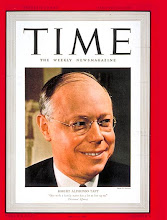
Time magazine just put "Party Crashers" Rand Paul, Christine O'Donnell, Marco Rubio, and Meg Whitman on its election issue cover. That Bush Republican Marco Rubio and former eBay CEO and billionaire Meg Whitman are somehow considered "a new breed of Republicans" tells us enough about what is considered "Tea Party" these days.

Too much buzzkill?

The first reason for skepticism is that there has not been a serious philosophical shift, nay even a debate within the GOP.

One might argue that support for the bank bailouts or President Obama's stimulus became a litmus test since it resulted in the scalp of Bob Bennett and the defection of Arlen Specter. But that anyone can support the promotion to Speaker of the House for bailout leader John Boehner suggests that the party leadership won't have to pay for their sins.

The one issue that got Republicans kicked out in the first place, foreign policy and the disastrous experiments in Middle Eastern nation-building, has been a non-issue in this election cycle.

Republicans have convinced themselves and probably convinced a lot of voters that the real reason they got booted was because they spent too much. The party's recent emphasis on economic issues would be a step in the right direction if it was rooted in anything besides partisanship. Like the kid who got spanked for sticking his hand in the cookie jar, these Republicans are only sorry they got caught.

Secondly, there is nothing in this election to suggest confidence in Republicans -- only that Democrats failed and voters had nowhere else to turn.

Republican victories this year are also consistent with historical precedent. In America's duopoly, the ruling party traditionally loses big in the first midterm. One party fails and the other one gets their chance to do . . . something.

In 1954, during Dwight Eisenhower's first term as president and the first such Republican in 20 years, the GOP lost 18 seats in the House. Reagan's Republicans got routed in 1982 while the economy was still sour. Bill Clinton had large majorities in Congress in 1994 before losing a whopping 54 seats. With the memory of 9/11 still fresh, George W. Bush's GOP temporarily broke the trend by adding 8 seats at midterm.

Since the Republicans have gone into exile, there has been no urgency to address issues. Republican identity for the past two years has been wrapped up in opposition to the Democratic president. It's not because he's black. It's because he's a Democrat.

The new Republican ascendance has nothing to do with a re-birth of conservatism or faith in the GOP and everything to do with a Democratic ruling majority that didn't delivery what it promised despite overwhelming majorities.

The Republicans' position as the majority party in Congress doesn't preclude them from relinquishing their title as the Party of No. They can still oppose President Obama at every turn for the next two years but that won't mean they stand for anything.

The Republican Party doesn't need to be restored to power. It needs some fresh ideas and new leaders.

And if Barack Obama can defy conventional wisdom and make a Clintonian move to the Center, who will he and the rest of us have to thank for providing no genuine alternative?

Monday, March 22, 2010

Americans Learn to Love Government

Democrats hail this as a major breakthrough in their goal of finally getting every American insured. Republicans are denouncing the action as unprecedented big government tyranny that they will continue to fight, sure to draw cheers from the base.

But Republicans like John “Bailout” Boehner can jeer all they want about how Congress failed to listen to the will of the people, how this was shoved down the throats of the American people and how Democrats like Bart Stupak will pay at the ballot box in November.

The GOP, certain to make gains this November, will undoubtedly bludgeon the Democrats this fall with their health care bill, which was achieved through any number of shady means, although any significant resistance will likely end there.

One of the biggest reasons is that there are two Republican Parties. There is the party that is out of power and/or campaigning for reelection which purports to adhere to the Constitution and restraining government. This is the party that excites the Tea Partiers. The other party is the one that returns to power, retains the apparatuses Democrats instituted and introduces some of their own. This is the party that deserves to be run out of town and the one that brings the Democrats and this vicious cycle back.

But the screaming masses on the Right need to know one thing: Republicans have had numerous opportunities to roll back the welfare state. The Social Security Act of 1935 passed with bipartisan support. The New Deal remained firmly in place after eight years of Eisenhower.

Republicans have won seven of the eleven presidential elections since Medicare passed, yet Republicans not only preserved that single-payer program but expanded it in 2003 under a Republican president and a Republican congress. This means that Republicans are either

A). Fine with keeping the welfare state in place so they too can control Americans’ lives, or

B). They are too weak-willed to address the politically suicidal task of cutting entitlements. (Hint: Either answer is acceptable)

Even if there is no public option right now, universal health care is still in our future. Since the time of FDR, America has never taken a step away from government health care, only steps towards it.

And if there is nothing as permanent as a temporary government program, what can we say about something as transformational as this legislation?

The other big reason there won’t likely be any longstanding resistance is that Americans have already gotten comfortable with the idea of government health care.

Though often hesitant at first, Americans have shown that they do grow to love their entitlements.

Social Security and Medicare were measures that were denounced at the time as socialist but Americans have largely accepted these entitlements as American birthrights on a par with freedom of religion.

In today’s debate over the Democrats’ plan, Republicans demonstrated this by wailing about the cuts to Medicare as a way to fund the new program, not whether Medicare is constitutional in the first place.

The debate over private vs. public health care was lost long before Sunday’s vote.

Over seventy years ago, journalist Peter Edward “Garet” Garrett wrote about the New Deal in "The Revolution Was":

"There are those who still think they are holding the pass against a revolution that may be coming up the road. But they are gazing in the wrong direction. The revolution is behind them. It went by in the Night of Depression, singing songs to freedom. . . .

And:

“A government that has been supported by the people and so controlled by the people became one that supported the people and so controlled them. Much of it is irreversible. That is true because habits of dependence are much easier to form than to break.”

Those dependencies Americans have acquired, Social Security and Medicare, are running a hole in the budget. The biggest parts of the federal budget are the entitlements and all defense spending. The debt is currently $13 trillion. The Democrats propose that they can insure all Americans by just cutting from Medicare. At best, this is a solution that simply rearranges the debt. Republicans seem to be proposing that they can keep entitlement spending where it is, military spending where it is, cut taxes, and everything will be fine.

Cuts in the entitlement programs just won’t happen. Republicans won’t touch them because Democrats already campaign that Republicans will take away Social Security from seniors. Democrats won’t take a butter knife to the defense budget because Republicans already assail them for being weak. And nobody will raise taxes during a recession or during an election season.

The American government has weaned the American people into dependency. Everybody wants to cut something but nobody wants to give up their own share of the federal goodies.

In 2003 regarding the Iraq war, General David Petraeus said, “Tell me how this ends.”

We should be asking ourselves that same question today.