If there is one reason people are considering supporting former Massachusetts governor Mitt Romney for president, it's because he's considered "electable," meaning he has a fair shot to defeat President Obama in 2012.
If there was one thing that hampered Romney's 2008 campaign it was the perception that he was a flip-flopper, a role which earned him the nickname "Multiple Choice Mitt."
While trying to present himself as a conservative, and even winning the endorsement of National Review, Romney was dogged by a very recent and probably very politically calculated switch from pro-choice on abortion to pro-life. This from a man who minced no words in assuring Massachusetts voters during a 2002 gubernatorial debate that he would "preserve and protect a woman's right to choose."
A more pressing issue for the 2012 presidential primaries is the national health care scheme passed by the last Congress. The plan that served as the model for Obamacare infamously bears the signature of Governor Mitt Romney.
Knowing that the Republican nominee in 2012 will have to campaign against Obama's landmark achievement, the president must be licking his lips knowing that a likely opponent of his will have to contort himself in an attempt to effectively campaign against himself. Voters would be sure to be reminded of another Massachusetts presidential candidate who also voted for something before he voted against it.
As of this writing, there is speculation that real estate mogul and reality TV star Donald Trump is running for president. Considering that a reality TV star may be a presidential contender should tell us that the line between reality and fantasy is already blurred.
Like Romney, Trump had always been pro-choice until he thought about running for president. Now "The Donald," a philandering, casino-running, beauty pageant-owning egomaniac has gotten religion. Doing an interview for the Christian Broadcasting Network, one that looks more like The Onion than anything else, Trump is now telling us how much he loves the Bible, how much he loves sending people Bibles, and how great it is going to church.
So now it appears that Trump is doing what Romney has done for years, trying to convince us that he is not what he has always been: an empty suit who will say anything to advance himself.
Last week, a few reports surfaced on the Drudge Report where Trump, on separate occasions, labeled both George W. Bush and Obama has "the worst president ever."
Shortly after the 2008 presidential election, Trump called Bush "evil" and even though he supported John McCain, he felt comfortable with President-elect Obama because he would govern by "consensus" and not rush off to war in a bull-headed manner like Bush. On the one hand, this may only mean that Trump was one among millions snookered by the smooth rhetoric of candidate Obama. But on the other hand, one has to wonder, if Trump believed Bush was bull-headed and rash in going to war, what had he ever seen in McCain's character and temperament that led him to believe the Arizona Republican would have been any different?
Even though Trump has traditionally supported Democrats and before he supported McCain, he preferred Hillary Clinton, which might give us a clue about how "The Donald" feels about government-run health care.
Like much of the current appeal of a Romney candidacy, the reason conservatives seem to be giving for supporting Trump is that he has a chance to beat Obama.
But if Republicans choose Trump, what does that say?
It means that after a lifetime of supporting Democrats and Democratic causes, all a celebrity like Trump has to do is start saying a few of the right things and he suddenly has conservative bona fides.
Are Republicans and conservatives so eager to make a Faustian Bargain to regain control of the White House that anyone, regardless of all the evidence against them, will do so long as they read the right lines?
Time will tell.
Showing posts with label National Review. Show all posts
Showing posts with label National Review. Show all posts
Thursday, April 21, 2011


Thursday, February 17, 2011
National Review stands beside History yelling "Go!"
While House Republicans’ repeal of Obamacare is laudable, the stark truth is that true repeal is still elusive. An alternative some have considered -- as opposed to waiting on the courts or a new government -- is to try nullification, the oft-maligned, seldom-employed tactic used by state governments where they refuse to enforce laws they deem unconstitutional.
Tom Woods of the Ludwig von Mises Institute has written not one but two recent books advocating nullification. In “Nullification” and “Rollback” Woods encourages the use of the tactic in a political landscape where choices between the two governing parties could hardly be worse.
No shortage of liberal writers have denounced Woods’ book or the idea of nullification. But when scholars in reputedly conservative journals join the dog-pile of their defense of the status quo, one has to wonder why these conservative intellectuals are so intent on letting unconstitutional legislation become more easily enshrined.
In the February 21, 2011 dead-tree issue of National Review (not online), Gettysburg College professor Allen C. Guelzo discards nullification and reaches a nearly identical conclusion as the liberal Princeton professor Sean Wilentz does in The New Republic.*
The subtitle of Guelzo’s “Nullification Temptation” is “Let’s stop Obamacare without blowing up the constitutional order.” In case Guelzo didn’t choose the title or subtitle himself, he immediate clarifies that there is no hyperbole when he refers to nullification as a “nuclear option” and declares “Its danger lies in how easily it could destroy not just Obamacare but the entire Constitution.”
Guelzo proceeds to list all the major events in the history of nullification: the Kentucky and Virginia Resolutions of 1798 and 1799, South Carolina’s attempt to nullify the 1832 “Tariff of Abominations,” and Wisconsin’s efforts to avoid enforcing the 1850 Fugitive Slave Act. Guelzo finishes this section by saying, “At no point, however, did nullification prevail.”
So if Professor Guelzo admits that nullification never prevailed against the comparatively miniscule federal government of the 19th Century, why is he saying that nullification today could “destroy . . . the entire Constitution” when Americans now live under a far more consolidated, bureaucratic, and intrusive state?
Does Guelzo expect his readers to believe that an America where cameras adorn nearly every intersection, IRS agents harass citizens for not relinquishing enough of their money to the state, and has a federal capitol employing more than 2 million, that even one state’s refusal to enforce Obamacare is enough to upend the whole edifice? A high school student wouldn’t get away with that sort of nonsense.
By opposing the very theory of nullification, liberal Wilentz and conservative Guelzo both endorse the criminalization of speech against the president (the Kentucky and Virginia Resolutions contra the Alien and Sedition Acts) and that slaves, even if they escaped to a free state like Wisconsin, had to be returned to their masters.
So why does Guelzo go to the trouble to discredit nullification? It makes sense for a liberal like Wilentz to recoil at any idea of resistance to the Washington leviathan. But why does someone posing as a proponent of limited government accept such a broad interpretation of the Constitution that would justify any and every expansive big government scheme?
One might assume that Guelzo might like to see nullification employed to frustrate Democratic health care legislation but that position forces him to confront what he cannot bear: What if someday Republicans pass legislation Democratic state governments find constitutionally wanting? Republican nullification would set the precedent that state governments can slow down or halt Washington’s machinations. To ensure that Republican monstrosities can govern the land Guelzo has to let Democratic fiascos remain too.
It’s the same reason Democrats haven’t repealed the Patriot Act and Republicans have never taken a scalpel to the welfare state. Both sides scream at each other but they always end up preserving each others’ programs. When the minority party becomes the majority they realize they can use their adversaries’ initiatives for their own gain.
If this is the state of the conservative opposition leading up to 2012 it’s no wonder a state-run health care operative like Mitt Romney is considered a serious contender to unseat a state-run health care operative like President Barack Obama.
*The title of Wilentz’s blog is “States of Anarchy.” In Guelzo’s, he calls nullification “the spirit of anarchy.” When historians who are supposed to represent two different sides of the spectrum end up with arguments and rhetoric so similar that one could almost charge the other with plagiarism, it is hard to refute the claim that there isn’t a dime’s worth of difference between the parties.
Tom Woods of the Ludwig von Mises Institute has written not one but two recent books advocating nullification. In “Nullification” and “Rollback” Woods encourages the use of the tactic in a political landscape where choices between the two governing parties could hardly be worse.
No shortage of liberal writers have denounced Woods’ book or the idea of nullification. But when scholars in reputedly conservative journals join the dog-pile of their defense of the status quo, one has to wonder why these conservative intellectuals are so intent on letting unconstitutional legislation become more easily enshrined.
In the February 21, 2011 dead-tree issue of National Review (not online), Gettysburg College professor Allen C. Guelzo discards nullification and reaches a nearly identical conclusion as the liberal Princeton professor Sean Wilentz does in The New Republic.*
The subtitle of Guelzo’s “Nullification Temptation” is “Let’s stop Obamacare without blowing up the constitutional order.” In case Guelzo didn’t choose the title or subtitle himself, he immediate clarifies that there is no hyperbole when he refers to nullification as a “nuclear option” and declares “Its danger lies in how easily it could destroy not just Obamacare but the entire Constitution.”
Guelzo proceeds to list all the major events in the history of nullification: the Kentucky and Virginia Resolutions of 1798 and 1799, South Carolina’s attempt to nullify the 1832 “Tariff of Abominations,” and Wisconsin’s efforts to avoid enforcing the 1850 Fugitive Slave Act. Guelzo finishes this section by saying, “At no point, however, did nullification prevail.”
So if Professor Guelzo admits that nullification never prevailed against the comparatively miniscule federal government of the 19th Century, why is he saying that nullification today could “destroy . . . the entire Constitution” when Americans now live under a far more consolidated, bureaucratic, and intrusive state?
Does Guelzo expect his readers to believe that an America where cameras adorn nearly every intersection, IRS agents harass citizens for not relinquishing enough of their money to the state, and has a federal capitol employing more than 2 million, that even one state’s refusal to enforce Obamacare is enough to upend the whole edifice? A high school student wouldn’t get away with that sort of nonsense.
By opposing the very theory of nullification, liberal Wilentz and conservative Guelzo both endorse the criminalization of speech against the president (the Kentucky and Virginia Resolutions contra the Alien and Sedition Acts) and that slaves, even if they escaped to a free state like Wisconsin, had to be returned to their masters.
So why does Guelzo go to the trouble to discredit nullification? It makes sense for a liberal like Wilentz to recoil at any idea of resistance to the Washington leviathan. But why does someone posing as a proponent of limited government accept such a broad interpretation of the Constitution that would justify any and every expansive big government scheme?
One might assume that Guelzo might like to see nullification employed to frustrate Democratic health care legislation but that position forces him to confront what he cannot bear: What if someday Republicans pass legislation Democratic state governments find constitutionally wanting? Republican nullification would set the precedent that state governments can slow down or halt Washington’s machinations. To ensure that Republican monstrosities can govern the land Guelzo has to let Democratic fiascos remain too.
It’s the same reason Democrats haven’t repealed the Patriot Act and Republicans have never taken a scalpel to the welfare state. Both sides scream at each other but they always end up preserving each others’ programs. When the minority party becomes the majority they realize they can use their adversaries’ initiatives for their own gain.
If this is the state of the conservative opposition leading up to 2012 it’s no wonder a state-run health care operative like Mitt Romney is considered a serious contender to unseat a state-run health care operative like President Barack Obama.
*The title of Wilentz’s blog is “States of Anarchy.” In Guelzo’s, he calls nullification “the spirit of anarchy.” When historians who are supposed to represent two different sides of the spectrum end up with arguments and rhetoric so similar that one could almost charge the other with plagiarism, it is hard to refute the claim that there isn’t a dime’s worth of difference between the parties.
Thursday, February 18, 2010
War Party and Tea
With the surprise retirement of Evan Bayh, widely assumed to be a shoo-in for reelection, Republicans can lick their chops some more about the electoral gains they are sure to make this fall.
Perhaps the Tea Party pressure is paying off. Maybe enough of those evil Democrats are getting the picture that their big government machinations are history and a renewed, revitalized, and reformed Republican Party is poised to set the ship aright by following the Constitution and restoring the republic to the one bequeathed to us by the founding fathers.
Probably not.
Like Obama, the Republicans are misreading the early election returns.
In 2006 and 2008, Americans sick of the Republicans, their ill-conceived wars, and a miserable economy, threw the GOP and their “permanent majority” out. 2008 was a year where the Republicans were so despised that Democrats could have literally nominated a yellow dog and still won the presidency. Not sensing this, Obama and the Democrats introduced to America an agenda that envisioned a health care plan that would inevitably lead to a government take-over of the industry.
Republicans have responded by defeating Democrats in Virginia, New Jersey, and of all places, Massachusetts.
So how are they misreading the election results?
They are taking these early Democratic defeats to mean that, even though the Republicans have offered no agenda of change, the American people must want back the good old days of the early 2000s of the ambiguous “War on Terror” and endless deficit spending.
No sooner had Scott Brown embarrassed his daughters on national television did National Review’s Andrew McCarthy assure us that it was the War on Terror that really motivated people to get out there by praising how:
“Scott Brown went out and made the case for enhanced interrogation, for denying terrorists the rights of criminal defendants, for detaining them without trial, and for trying them by military commission. It worked. It will work for other candidates willing to get out of their Beltway bubbles . . . .
“He said the United States needs to stop apologizing for defending itself. And he won going away, in the bluest of blue states.”
What McCarthy means by “defending itself,” is keeping the same Bush foreign policy that Americans have already repudiated.
This also shows how, despite all the good rhetoric about the Constitution, limited government, and reduced spending at home, all of that takes a back seat to the ubiquitous “War on Terror” and makes the so-called Tea Parties a farce.
Just look at the reception given to Kentucky Senate candidate Rand Paul.
Paul, who has consistently led in Kentucky polls for at least four months, is continually vilified by his party and their media henchmen for a variety of bizarre reasons. He’s kooky. He’s pro-abortion (untrue). He’s a marijuana advocate (a dramatic distortion). But the most telling criticism is that Rand Paul is somehow weak on military matters and wants to surrender the “War on Terror.”
To make that argument ignores the fact that Paul’s first campaign commercial declared that he will “stop travel visas from terrorist nations” and “keep prisoners off U.S. soil,” as well as supporting military tribunals at Guantanamo Bay. On his website, he has expressed his support for a declaration of war on Afghanistan. He also wrangled the endorsement of war empress Sarah Palin. To the chagrin of all the little Churchills with laptops, Rand Paul is not Neville Chamberlain.
But it was Jeanette Pryor of Newsrealblog that summed up the supremacy of war when she said this regarding Sarah Palin’s endorsement:
"The logical conclusion of this endorsement is that Palin considers America’s global defense of freedom, national defense, the War on Terror, the defeat of Radical Islam, and the support of Israel and our allies, to be less important than 'some' domestic policy issues."
Pryor says plainly that not only are the wars more important than our domestics, but Israel is too. Are we for America first or are we not? Or as The American Conservative’s Daniel Larison noted about the reaction to Palin’s endorsement, she “has erred because she forgot that national security is the one area where conservatives cannot meaningfully disagree and still be accepted.”
During the Bush administration, everything took a backseat to the wars. Spending skyrocketed. The Roe v. Wade atrocity remained firmly in place. Border security was abandoned. The federal government sunk its claws deeper into American education. Executive power increased. But the wars, well, that’s what really mattered.
These GOP sycophants have already demonstrated that once the Republicans are back in power, the latter aim to do everything exactly the same once again. And the former aim to continue their bidding.
From the party that has had no ideas for fixing the problems they helped cause this should be no surprise.
Perhaps the Tea Party pressure is paying off. Maybe enough of those evil Democrats are getting the picture that their big government machinations are history and a renewed, revitalized, and reformed Republican Party is poised to set the ship aright by following the Constitution and restoring the republic to the one bequeathed to us by the founding fathers.
Probably not.
Like Obama, the Republicans are misreading the early election returns.
In 2006 and 2008, Americans sick of the Republicans, their ill-conceived wars, and a miserable economy, threw the GOP and their “permanent majority” out. 2008 was a year where the Republicans were so despised that Democrats could have literally nominated a yellow dog and still won the presidency. Not sensing this, Obama and the Democrats introduced to America an agenda that envisioned a health care plan that would inevitably lead to a government take-over of the industry.
Republicans have responded by defeating Democrats in Virginia, New Jersey, and of all places, Massachusetts.
So how are they misreading the election results?
They are taking these early Democratic defeats to mean that, even though the Republicans have offered no agenda of change, the American people must want back the good old days of the early 2000s of the ambiguous “War on Terror” and endless deficit spending.
No sooner had Scott Brown embarrassed his daughters on national television did National Review’s Andrew McCarthy assure us that it was the War on Terror that really motivated people to get out there by praising how:
“Scott Brown went out and made the case for enhanced interrogation, for denying terrorists the rights of criminal defendants, for detaining them without trial, and for trying them by military commission. It worked. It will work for other candidates willing to get out of their Beltway bubbles . . . .
“He said the United States needs to stop apologizing for defending itself. And he won going away, in the bluest of blue states.”
What McCarthy means by “defending itself,” is keeping the same Bush foreign policy that Americans have already repudiated.
This also shows how, despite all the good rhetoric about the Constitution, limited government, and reduced spending at home, all of that takes a back seat to the ubiquitous “War on Terror” and makes the so-called Tea Parties a farce.
Just look at the reception given to Kentucky Senate candidate Rand Paul.
Paul, who has consistently led in Kentucky polls for at least four months, is continually vilified by his party and their media henchmen for a variety of bizarre reasons. He’s kooky. He’s pro-abortion (untrue). He’s a marijuana advocate (a dramatic distortion). But the most telling criticism is that Rand Paul is somehow weak on military matters and wants to surrender the “War on Terror.”
To make that argument ignores the fact that Paul’s first campaign commercial declared that he will “stop travel visas from terrorist nations” and “keep prisoners off U.S. soil,” as well as supporting military tribunals at Guantanamo Bay. On his website, he has expressed his support for a declaration of war on Afghanistan. He also wrangled the endorsement of war empress Sarah Palin. To the chagrin of all the little Churchills with laptops, Rand Paul is not Neville Chamberlain.
But it was Jeanette Pryor of Newsrealblog that summed up the supremacy of war when she said this regarding Sarah Palin’s endorsement:
"The logical conclusion of this endorsement is that Palin considers America’s global defense of freedom, national defense, the War on Terror, the defeat of Radical Islam, and the support of Israel and our allies, to be less important than 'some' domestic policy issues."
Pryor says plainly that not only are the wars more important than our domestics, but Israel is too. Are we for America first or are we not? Or as The American Conservative’s Daniel Larison noted about the reaction to Palin’s endorsement, she “has erred because she forgot that national security is the one area where conservatives cannot meaningfully disagree and still be accepted.”
During the Bush administration, everything took a backseat to the wars. Spending skyrocketed. The Roe v. Wade atrocity remained firmly in place. Border security was abandoned. The federal government sunk its claws deeper into American education. Executive power increased. But the wars, well, that’s what really mattered.
These GOP sycophants have already demonstrated that once the Republicans are back in power, the latter aim to do everything exactly the same once again. And the former aim to continue their bidding.
From the party that has had no ideas for fixing the problems they helped cause this should be no surprise.
Tuesday, October 27, 2009
Compassionate Conservatism Revisited?
As gubernatorial races approach in New Jersey and Virginia, Republicans are rubbing their hands in anticipation of the beginning of a comeback. Delivering one or both of the governorships into GOP hands may be an early sign that Americans are not receptive to the change of Barack Obama’s status quo-ism.
This prospect can be very enticing. There is some speculation that Sarah Palin might run for office again. Her endorsement of Conservative Party candidate Doug Hoffman in New York’s 23rd district may make the difference in the 2009 special election. So too might Arlen Specter be sent packing and Chris “Countrywide” Dodd might finally pay for that sweetheart mortgage.
While extricating those suits from their seats might be attractive, one has to wonder what the Republicans have to offer the country other than the “R”’s beside their names.
One potential sleeper contest in 2010 is the Florida senate race. Charlie Crist, global warming-monger and stimulus money beggar, has announced that he will not seek another term as governor so he can run for the senate seat vacated by Mel Martinez. Crist is the favorite in both the primary and the general election, but he faces a challenge from a former underling, one-time Florida Speaker of the House Marco Rubio.
Rubio’s positives make him popular among the grassroots activists. He is a Fair Taxer, supporting a national sales tax instead of the income tax, a solution that fellow anti-IRSites like myself fear might only rearrange a problem instead of solving it. He favors a balanced budget amendment, a position sure to make conservatives swoon in reaction to President Obama’s ridiculous spending habits.
The benefit of Marco Rubio is that he is of Cuban ancestry. The media and haughty liberals never shirk an opportunity to remind the GOP that they are the “Old White Guy Party.” Rubio’s Hispanic heritage automatically catapults him to the front of the line of Republican examples of diversity where he can sit with Michael Steele, Sarah Palin, and Bobby Jindal.
National Review placed the 38-year-old on the cover of its September 7 issue claiming “Yes, He Can” and that the party’s conservative activists need to get behind this “true conservative.”
Whether young Rubio is a “true conservative” or not is a sub question to the earlier one of what the Republicans have to offer: What does a “true conservative” have to offer during the Obama regnancy? What is “conservative” in the post-Bush era?
In a National Review Online interview with the insurgent, Rubio “counts former Gov. Jeb Bush as one of his most important political mentors” and the former governor has since endorsed Rubio as has son, Jeb Jr.
Not one to beat a dead elephant, but conservatives ought to ask themselves one of these days, What exactly has the Bush family done for conservative causes? Break promises not to raise taxes? Take turns invading Iraq? Spent like there was no tomorrow and completely nullifying any good tax cuts could do? Of course Jeb is his own man, but there are many sins of the father and brother for which he must atone.
One of the other GOP veterans who has hitched himself to the Rubio wagon is Mike Huckabee, who is reciprocating the endorsement Rubio made for him in 2008. When asked why he supported Huckabee, who had difficulty attracting much support outside single issue social conservatives, Rubio said,
“Two things I like about Mike Huckabee: One was his support of the Fair Tax . . . Second, I thought that of all the candidates, he did the best job of connecting how the people’s social and moral well-being cannot be separated from their economic well-being.” (emphasis mine)
“the people’s social and moral well-being cannot be separated from their economic well-being.”
Translation: excessive domestic spending known during the Bush years as Compassionate Conservatism.
Toeing both sides of a fine line to appease immigration restrictionists in the party as well as the open borders crowd, Rubio concedes that “On immigration, [Retiring Republican Senator Mel Martinez] voted for a package I probably would not have voted for . . .” (emphasis mine)
Rubio also chooses to toe both sides when it comes to the biggest fiasco of the generation, the Iraq War. Here he takes Jonah Goldberg’s Orwellian position on Iraq: it was a mistake but it was not wrong:
“Obviously, the Iraq War has had the chilling effect of making us question all intelligence findings now. . . . I think that there is some credence, in hindsight, to the notion that the real battlefield was in Afghanistan all along. . . .
“But understand at the same time, we were being told that Iraq was on the verge of gaining a nuclear capability. . . . So it’s impossible to sit here and give a fair analysis in hindsight.”
Translation: OK, maybe the Iraq War wasn’t such a great idea after all. Maybe. But who are we to say it was a mistake? It was just a war. No reason to worry about responsibility for it.
So for all the talk about the Republican Party getting its act together and finally getting back to its conservative principles, if it ever really had them, the "conservatism" during the Obama dispensation looks eerily similar to the one during the days of the Bush regime.
Mushy immigration rhetoric, government taking an active role in the people’s “well-being” and a persistent refusal to criticize GOP foreign policy, Rubio is probably better than Charlie Crist, but might we entertain the possibility that there might be a better potential standard-bearer?
This prospect can be very enticing. There is some speculation that Sarah Palin might run for office again. Her endorsement of Conservative Party candidate Doug Hoffman in New York’s 23rd district may make the difference in the 2009 special election. So too might Arlen Specter be sent packing and Chris “Countrywide” Dodd might finally pay for that sweetheart mortgage.
While extricating those suits from their seats might be attractive, one has to wonder what the Republicans have to offer the country other than the “R”’s beside their names.
One potential sleeper contest in 2010 is the Florida senate race. Charlie Crist, global warming-monger and stimulus money beggar, has announced that he will not seek another term as governor so he can run for the senate seat vacated by Mel Martinez. Crist is the favorite in both the primary and the general election, but he faces a challenge from a former underling, one-time Florida Speaker of the House Marco Rubio.
Rubio’s positives make him popular among the grassroots activists. He is a Fair Taxer, supporting a national sales tax instead of the income tax, a solution that fellow anti-IRSites like myself fear might only rearrange a problem instead of solving it. He favors a balanced budget amendment, a position sure to make conservatives swoon in reaction to President Obama’s ridiculous spending habits.
The benefit of Marco Rubio is that he is of Cuban ancestry. The media and haughty liberals never shirk an opportunity to remind the GOP that they are the “Old White Guy Party.” Rubio’s Hispanic heritage automatically catapults him to the front of the line of Republican examples of diversity where he can sit with Michael Steele, Sarah Palin, and Bobby Jindal.
National Review placed the 38-year-old on the cover of its September 7 issue claiming “Yes, He Can” and that the party’s conservative activists need to get behind this “true conservative.”
Whether young Rubio is a “true conservative” or not is a sub question to the earlier one of what the Republicans have to offer: What does a “true conservative” have to offer during the Obama regnancy? What is “conservative” in the post-Bush era?
In a National Review Online interview with the insurgent, Rubio “counts former Gov. Jeb Bush as one of his most important political mentors” and the former governor has since endorsed Rubio as has son, Jeb Jr.
Not one to beat a dead elephant, but conservatives ought to ask themselves one of these days, What exactly has the Bush family done for conservative causes? Break promises not to raise taxes? Take turns invading Iraq? Spent like there was no tomorrow and completely nullifying any good tax cuts could do? Of course Jeb is his own man, but there are many sins of the father and brother for which he must atone.
One of the other GOP veterans who has hitched himself to the Rubio wagon is Mike Huckabee, who is reciprocating the endorsement Rubio made for him in 2008. When asked why he supported Huckabee, who had difficulty attracting much support outside single issue social conservatives, Rubio said,
“Two things I like about Mike Huckabee: One was his support of the Fair Tax . . . Second, I thought that of all the candidates, he did the best job of connecting how the people’s social and moral well-being cannot be separated from their economic well-being.” (emphasis mine)
“the people’s social and moral well-being cannot be separated from their economic well-being.”
Translation: excessive domestic spending known during the Bush years as Compassionate Conservatism.
Toeing both sides of a fine line to appease immigration restrictionists in the party as well as the open borders crowd, Rubio concedes that “On immigration, [Retiring Republican Senator Mel Martinez] voted for a package I probably would not have voted for . . .” (emphasis mine)
Rubio also chooses to toe both sides when it comes to the biggest fiasco of the generation, the Iraq War. Here he takes Jonah Goldberg’s Orwellian position on Iraq: it was a mistake but it was not wrong:
“Obviously, the Iraq War has had the chilling effect of making us question all intelligence findings now. . . . I think that there is some credence, in hindsight, to the notion that the real battlefield was in Afghanistan all along. . . .
“But understand at the same time, we were being told that Iraq was on the verge of gaining a nuclear capability. . . . So it’s impossible to sit here and give a fair analysis in hindsight.”
Translation: OK, maybe the Iraq War wasn’t such a great idea after all. Maybe. But who are we to say it was a mistake? It was just a war. No reason to worry about responsibility for it.
So for all the talk about the Republican Party getting its act together and finally getting back to its conservative principles, if it ever really had them, the "conservatism" during the Obama dispensation looks eerily similar to the one during the days of the Bush regime.
Mushy immigration rhetoric, government taking an active role in the people’s “well-being” and a persistent refusal to criticize GOP foreign policy, Rubio is probably better than Charlie Crist, but might we entertain the possibility that there might be a better potential standard-bearer?
Thursday, February 12, 2009
Abraham Lincoln's Birthday
Unless someone has been comatose or was just released from a gulag, I am sure everyone is vaguely aware that Thursday, February 12, marks the 200th birthday of our 16th president, Abraham Lincoln.
It has been 200 years since the birth of “The Great Emancipator” yet I find little to celebrate on this occasion. Perhaps that is why I am dedicating this essay today not to the greatness of Lincoln, but to the horrors that the proceeded from his reign.
There have already been hagiographic tomes heaped on Lincoln’s cold body and I am sure there are plenty more to come, but they are really becoming more than I can bear.
To listen to the epithets, one might think that Abraham Lincoln was a combination of Moses, Jesus, Buddha, and this dispensation’s messiah, Barack Obama.
Judging from the adulations heaped on him, Abraham Lincoln foretold the coming civil rights movement and the work of Martin Luther King, he was the savior of the black race, his words of wisdom are constantly repeated to justify any government program or initiative, as if they were the words of Holy Scripture. By this point, any rational person should be tired of everything being said about our 16th president, if for no other reason, no one can possibly be that saintly.
The words of praise are so over the top. I can’t even estimate how many times I have read newspaper editorials and letters to the editor that find some way to incorporate both Abraham Lincoln and Barack Obama. There appeared cartoons of the specter of Lincoln standing next to Mr. Obama while the latter took the oath of office. It is simply crass and beyond the scope of reality.
If only more people knew that Lincoln’s war was not so much about slavery but about centralizing his power. If only more people knew that despite graceful anti-slavery rhetoric, Lincoln was just fine with the institution of slavery as long as he could prevent the southern states from successfully seceding. If only more people knew that Lincoln thought blacks were inferior to whites. If only more people knew that once the slaves had been freed, Lincoln intended to ship them back to Africa because peaceful coexistence between the two races was an impossibility in Lincoln’s mind. I cannot speak for dead men, but taking those considerations into account, I would find it hard for Lincoln to be deliriously overjoyed at the election of Barack Obama.
Everybody, it seems, is trying to get a piece of Lincoln during this “historic” time. Liberals like Mario Cuomo still think Lincoln matters because he was a great liberal himself while National Review is trying to turn the big government warmonger into a conservative (which National Review has made a habit of doing in recent years).
Abraham Lincoln, who suspended the writ of habeas corpus, jailed the Maryland state legislature, issued an arrest warrant for the octogenarian Chief Justice Roger B. Taney, and unilaterally shut down opposition newspapers in the North, was perhaps not really the 16th president of the United States, but its 1st dictator.
But didn’t he actually free the slaves? Many people (including myself at one time) still think so. He is credited as “The Great Emancipator” because he issued the Emancipation Proclamation in 1863. But students of history know that the Emancipation Proclamation did nothing to actually free a single slave. It was a deft piece of propaganda that purported to free slaves in states that were still in rebellion, even if he had no control over those states. However, slaves were not freed in states where the rebellion had been quelled, like Louisiana. So, to answer the question, who actually freed the slaves, we must look to the 13th amendment, passed eight months after Lincoln died.
This may be startling news for typical Lincoln-worshipers. What may be more startling is that besides being admired by today’s Republican and Democratic parties, Abraham Lincoln was admired by Adolf Hitler and communists everywhere. Why? Because Lincoln dissolved the Union as a compact of states and turned it into one unified nation under a centralized government. Hitler valued Lincoln’s crushing of the seceding states because it meant that the central government had power over all the other territories and states. Lincoln destroyed the concept of divided sovereignty, something that existed in America until that time, and brought every state under his control. Hitler enthusiastically endorsed Lincoln's actions of crushing the seceding states and forcibly unifying a country under the rule of one central government. Germany, like the United States before the Civil War, was a country that before 1871 was decentralized whose disparate provinces and territories were sovereign over their own affairs. Ensuring that divided sovereignty, the principle that each state was sovereign, was a thing of the past, Hitler could have dictatorial control over the Teutonic lands. It worked the same way 70 years before during the American Civil War.
The ultimate consequences of Lincoln’s war was that it crushed the old republic, one that was a voluntary union, embodied in the 10th amendment, stating that the individual states were sovereign. The Civil War, which itself did not end slavery (again, it was the 13th amendment that accomplished that) but did end the concept of a voluntary union. The victory of the North over the seceding southern states made the federal government supreme over all matters, nullified the 10th amendment for all intents and purposes, and made the state governments little more than satraps for the central government.
There can be more said about Lincoln’s actions as president but such a discussion could turn this blog into book form. Instead, I would recommend Thomas DiLorenzo’s book Lincoln Unmasked, a passionately written book that deals with both the economic and political consequences of Lincoln’s actions and how those actions did not always match up to his pious rhetoric. (DiLorenzo is an economics professor, not a professional historian, but his book is a decent introduction to the darker side of Lincoln)
What does all this mean, anyway? I’m sure this will come off as cranky to some readers. But, with so many tributes and eulogies coming out about Abraham Lincoln, I think more people should know that there is more to Mr. Lincoln than what is spoon fed to the public by the government and its schools. Many of these aspects have been covered up, because they are too blunt and politically incorrect.
So, when we celebrate the birth of this man, we should take careful note of just who and what we are celebrating. There are many conservatives today who are wailing over the expansion President Obama is making regarding the federal government. These conservatives should know that Republicans have been among the greatest expanders of the federal government. Whether it was the most recent Republican president or the first, Republicans have a lot of blame to put on themselves for the expansion of government. Conservatives who bemoan that federal growth, should keep in mind that Abraham Lincoln was one of the main movers and shakers of big government. And conservatives need to reconcile those ideas of loving Lincoln while hating big government because the two go hand-in-hand.
So on this day, I do not plan to celebrate. I only mourn, not for the slain man, but the old American republic which perished shortly before he did.
Afterword: I like picking on National Review, the one-time flagship of American conservatism (which in many ways it still is) and this piece is no different. Their February 23, 2009 issue is entitled “The Conservative Lincoln.” The summary of their cover story claims that Lincoln “was a torchbearer for free markets, individual liberty, and economic mobility, the rule of law, natural rights, and prudence in governing.” This is a remarkable statement considering Lincoln was a supporter of tariffs, which are an intrusion into the purely free market. He might seem like a stalwart of individual liberty because of his anti-slavery rhetoric, but even if he could have freed the slaves, it was only to ship them back to Africa. This is also the man who unconstitutionally suspended the writ of habeas corpus and absolutely ignored the Constitution altogether which makes it hard for me to say that he was prudent in governing. In my opinion, he is the man who most abused power during his time as president - far more than George W. Bush ever exceeded his authority. And such is the way conservatism has declined among the likes of the National Review crowd. This is actually a good lead-in to what will likely be my next piece: the fascism of Rush Limbaugh.
It has been 200 years since the birth of “The Great Emancipator” yet I find little to celebrate on this occasion. Perhaps that is why I am dedicating this essay today not to the greatness of Lincoln, but to the horrors that the proceeded from his reign.
There have already been hagiographic tomes heaped on Lincoln’s cold body and I am sure there are plenty more to come, but they are really becoming more than I can bear.
To listen to the epithets, one might think that Abraham Lincoln was a combination of Moses, Jesus, Buddha, and this dispensation’s messiah, Barack Obama.
Judging from the adulations heaped on him, Abraham Lincoln foretold the coming civil rights movement and the work of Martin Luther King, he was the savior of the black race, his words of wisdom are constantly repeated to justify any government program or initiative, as if they were the words of Holy Scripture. By this point, any rational person should be tired of everything being said about our 16th president, if for no other reason, no one can possibly be that saintly.
The words of praise are so over the top. I can’t even estimate how many times I have read newspaper editorials and letters to the editor that find some way to incorporate both Abraham Lincoln and Barack Obama. There appeared cartoons of the specter of Lincoln standing next to Mr. Obama while the latter took the oath of office. It is simply crass and beyond the scope of reality.
If only more people knew that Lincoln’s war was not so much about slavery but about centralizing his power. If only more people knew that despite graceful anti-slavery rhetoric, Lincoln was just fine with the institution of slavery as long as he could prevent the southern states from successfully seceding. If only more people knew that Lincoln thought blacks were inferior to whites. If only more people knew that once the slaves had been freed, Lincoln intended to ship them back to Africa because peaceful coexistence between the two races was an impossibility in Lincoln’s mind. I cannot speak for dead men, but taking those considerations into account, I would find it hard for Lincoln to be deliriously overjoyed at the election of Barack Obama.
Everybody, it seems, is trying to get a piece of Lincoln during this “historic” time. Liberals like Mario Cuomo still think Lincoln matters because he was a great liberal himself while National Review is trying to turn the big government warmonger into a conservative (which National Review has made a habit of doing in recent years).
Abraham Lincoln, who suspended the writ of habeas corpus, jailed the Maryland state legislature, issued an arrest warrant for the octogenarian Chief Justice Roger B. Taney, and unilaterally shut down opposition newspapers in the North, was perhaps not really the 16th president of the United States, but its 1st dictator.
But didn’t he actually free the slaves? Many people (including myself at one time) still think so. He is credited as “The Great Emancipator” because he issued the Emancipation Proclamation in 1863. But students of history know that the Emancipation Proclamation did nothing to actually free a single slave. It was a deft piece of propaganda that purported to free slaves in states that were still in rebellion, even if he had no control over those states. However, slaves were not freed in states where the rebellion had been quelled, like Louisiana. So, to answer the question, who actually freed the slaves, we must look to the 13th amendment, passed eight months after Lincoln died.
This may be startling news for typical Lincoln-worshipers. What may be more startling is that besides being admired by today’s Republican and Democratic parties, Abraham Lincoln was admired by Adolf Hitler and communists everywhere. Why? Because Lincoln dissolved the Union as a compact of states and turned it into one unified nation under a centralized government. Hitler valued Lincoln’s crushing of the seceding states because it meant that the central government had power over all the other territories and states. Lincoln destroyed the concept of divided sovereignty, something that existed in America until that time, and brought every state under his control. Hitler enthusiastically endorsed Lincoln's actions of crushing the seceding states and forcibly unifying a country under the rule of one central government. Germany, like the United States before the Civil War, was a country that before 1871 was decentralized whose disparate provinces and territories were sovereign over their own affairs. Ensuring that divided sovereignty, the principle that each state was sovereign, was a thing of the past, Hitler could have dictatorial control over the Teutonic lands. It worked the same way 70 years before during the American Civil War.
The ultimate consequences of Lincoln’s war was that it crushed the old republic, one that was a voluntary union, embodied in the 10th amendment, stating that the individual states were sovereign. The Civil War, which itself did not end slavery (again, it was the 13th amendment that accomplished that) but did end the concept of a voluntary union. The victory of the North over the seceding southern states made the federal government supreme over all matters, nullified the 10th amendment for all intents and purposes, and made the state governments little more than satraps for the central government.
There can be more said about Lincoln’s actions as president but such a discussion could turn this blog into book form. Instead, I would recommend Thomas DiLorenzo’s book Lincoln Unmasked, a passionately written book that deals with both the economic and political consequences of Lincoln’s actions and how those actions did not always match up to his pious rhetoric. (DiLorenzo is an economics professor, not a professional historian, but his book is a decent introduction to the darker side of Lincoln)
What does all this mean, anyway? I’m sure this will come off as cranky to some readers. But, with so many tributes and eulogies coming out about Abraham Lincoln, I think more people should know that there is more to Mr. Lincoln than what is spoon fed to the public by the government and its schools. Many of these aspects have been covered up, because they are too blunt and politically incorrect.
So, when we celebrate the birth of this man, we should take careful note of just who and what we are celebrating. There are many conservatives today who are wailing over the expansion President Obama is making regarding the federal government. These conservatives should know that Republicans have been among the greatest expanders of the federal government. Whether it was the most recent Republican president or the first, Republicans have a lot of blame to put on themselves for the expansion of government. Conservatives who bemoan that federal growth, should keep in mind that Abraham Lincoln was one of the main movers and shakers of big government. And conservatives need to reconcile those ideas of loving Lincoln while hating big government because the two go hand-in-hand.
So on this day, I do not plan to celebrate. I only mourn, not for the slain man, but the old American republic which perished shortly before he did.
Afterword: I like picking on National Review, the one-time flagship of American conservatism (which in many ways it still is) and this piece is no different. Their February 23, 2009 issue is entitled “The Conservative Lincoln.” The summary of their cover story claims that Lincoln “was a torchbearer for free markets, individual liberty, and economic mobility, the rule of law, natural rights, and prudence in governing.” This is a remarkable statement considering Lincoln was a supporter of tariffs, which are an intrusion into the purely free market. He might seem like a stalwart of individual liberty because of his anti-slavery rhetoric, but even if he could have freed the slaves, it was only to ship them back to Africa. This is also the man who unconstitutionally suspended the writ of habeas corpus and absolutely ignored the Constitution altogether which makes it hard for me to say that he was prudent in governing. In my opinion, he is the man who most abused power during his time as president - far more than George W. Bush ever exceeded his authority. And such is the way conservatism has declined among the likes of the National Review crowd. This is actually a good lead-in to what will likely be my next piece: the fascism of Rush Limbaugh.
Thursday, January 15, 2009
They Never Learn
Since 2006, when neoconservatism and the Republican Party of the George W. Bush years were thoroughly discredited, I began to realize that the GOP is like the Bourbons, the royal family deposed during the French Revolution, and fully restored after Napoleon’s final defeat. When Charles X became King of France in 1824, he ignored the liberals (not liberals in the current sense) and remained loyal to the royalist factions. Talleyrand, the distinguished diplomat, said that the “Bourbons had learned nothing and forgotten nothing.” So it would also seem with the Republicans and especially the neoconservatives.
George W. Bush squeaked his way to reelection in 2004 but the victory was short-lived. His second inaugural address was skeptically received due to its unfounded and ahistorical vision about “eliminating tyranny from the earth.” As if Afghanistan and the only-beginning to burn Iraq were not enough, the president seemed to think that America had the might and mandate to eliminate tyranny from the world and turn every other country into another America - at the point of a gun, that is.
In 2005, violence ratcheted up in Iraq, Hurricane Katrina hit, and the president was quickly becoming an abandoned man. The shabby response to the hurricane signaled a failure of government, or at least the bloated bureaucracy. The president was painted as a man who did not care about the plight of the New Orleanians displaced by the storm. It has been said that that was the beginning of the end for a positive Bush legacy.
Iraq descended into civil war in 2006 and every Republican faced an uphill battle in the midterm elections that year because almost all Republicans had steadfastly and unconditionally supported the president on his war that the country was souring on. When those election results returned, Democrats, who promised they would end U.S. involvement in Iraq, gained 31 House seats and the majority.
So how have the Bush Republicans and neoconservatives learned nothing and forgotten nothing? Even though they have been abandoning the president in droves, many of the neocons are only abandoning the man and none of the ideas that led to the failure of his presidency.
When presidential nominees began announcing their intentions in early 2007, the automatic frontrunners for the Republicans were Rudy Giuliani and John McCain. Both were fervent supporters of a war the American people had already decided they were tired of. No one in the entire Republican field, except Ron Paul, would admit that going to Iraq was a mistake. They only had differences with the way President Bush handled the war.
What is more, nobody would ever actually mention President Bush’s name because he had become such a pariah. But nobody would ever actually depart from the philosophy that led to Bush’s ruin: neoconservatism. There was no discussion about whether Iraq was the right course or not, only how it could have been done better, or whether we have any business beginning to bomb Iran, as if engaging that country militarily would prove any better for our country than engaging Iraq or Afghanistan have been.
The philosophy has not changed and the Republicans seem ready to continue losing elections and influence in the country.
This past Tuesday President-elect Barack Obama had his now-famous dinner at the home of George Will, who was hosting, among others, Bill Kristol of The Weekly Standard, one of the main theorists for American intervention in the Middle East. The meeting has been called, “Obama breaking bread with conservatives.” However, there is nothing particularly conservative about any of the people the new president dined with (besides Kristol, there was Rich Lowry of the formery conservative National Review, New York Times "conservative" David Brooks, and The Washington Post's Charles Krauthammer, another main theorist of American interventionism around the globe.
What is odd about this is that Mr. Obama spent his entire presidential campaign complaining about the path George W. Bush led us down and how we can’t afford any more of it.
So why was he meeting with several of the people who either planned or vociferously defended this disastrous presidency? As I have commented before, it is not as though the president-elect met with those on the Right such as Ron Paul, Pat Buchanan, or Joe Sobran, who opposed the Iraq war from the beginning, as Mr. Obama claims he had done. Is it possible that the "Change" president isn't going to change much of anything at all?
Despite his occasional antiwar rhetoric about the Iraqi quagmire, he seems intent on escalating the quagmire in Afghanistan. Escalating any war is sure to make any neoconservative or anyone pro-war on the Right delirious, so they are naturally gravitating toward him.
Even though this ideology of perpetual war for perpetual peace has crashed and burned during the Bush years, many of these people are still intent on preserving it for some time in the future.
A word of confession is required here: I was an Iraq war supporter from around 2003-late 2004. I didn’t understand too much of the war or the region, but supported it because I wanted to support my country and my president. But as I expanded my reading and my reasoning matured, I discovered that perhaps this war was not in the nation’s best strategic interest and may actually hurt us. I admit that I was wrong and have changed my mind. I maintain that it is not a flip-flop; I do maintain that I have gotten smarter than I was when I was 19/20 years old. Not to blow my own horn, but I believe it’s a shame others are still blinded by their own ideology of imperialism that they rationalize that it fails not because it is a fallen, sinful world where no ideology can work the way it does in one’s mind, but because the current executive was too incompetent to make it work right.
This policy of imperialism will fail with Barack Obama, too, but it doesn't look like he, nor anyone around him, will learn that before it is too late.
George W. Bush squeaked his way to reelection in 2004 but the victory was short-lived. His second inaugural address was skeptically received due to its unfounded and ahistorical vision about “eliminating tyranny from the earth.” As if Afghanistan and the only-beginning to burn Iraq were not enough, the president seemed to think that America had the might and mandate to eliminate tyranny from the world and turn every other country into another America - at the point of a gun, that is.
In 2005, violence ratcheted up in Iraq, Hurricane Katrina hit, and the president was quickly becoming an abandoned man. The shabby response to the hurricane signaled a failure of government, or at least the bloated bureaucracy. The president was painted as a man who did not care about the plight of the New Orleanians displaced by the storm. It has been said that that was the beginning of the end for a positive Bush legacy.
Iraq descended into civil war in 2006 and every Republican faced an uphill battle in the midterm elections that year because almost all Republicans had steadfastly and unconditionally supported the president on his war that the country was souring on. When those election results returned, Democrats, who promised they would end U.S. involvement in Iraq, gained 31 House seats and the majority.
So how have the Bush Republicans and neoconservatives learned nothing and forgotten nothing? Even though they have been abandoning the president in droves, many of the neocons are only abandoning the man and none of the ideas that led to the failure of his presidency.
When presidential nominees began announcing their intentions in early 2007, the automatic frontrunners for the Republicans were Rudy Giuliani and John McCain. Both were fervent supporters of a war the American people had already decided they were tired of. No one in the entire Republican field, except Ron Paul, would admit that going to Iraq was a mistake. They only had differences with the way President Bush handled the war.
What is more, nobody would ever actually mention President Bush’s name because he had become such a pariah. But nobody would ever actually depart from the philosophy that led to Bush’s ruin: neoconservatism. There was no discussion about whether Iraq was the right course or not, only how it could have been done better, or whether we have any business beginning to bomb Iran, as if engaging that country militarily would prove any better for our country than engaging Iraq or Afghanistan have been.
The philosophy has not changed and the Republicans seem ready to continue losing elections and influence in the country.
This past Tuesday President-elect Barack Obama had his now-famous dinner at the home of George Will, who was hosting, among others, Bill Kristol of The Weekly Standard, one of the main theorists for American intervention in the Middle East. The meeting has been called, “Obama breaking bread with conservatives.” However, there is nothing particularly conservative about any of the people the new president dined with (besides Kristol, there was Rich Lowry of the formery conservative National Review, New York Times "conservative" David Brooks, and The Washington Post's Charles Krauthammer, another main theorist of American interventionism around the globe.
What is odd about this is that Mr. Obama spent his entire presidential campaign complaining about the path George W. Bush led us down and how we can’t afford any more of it.
So why was he meeting with several of the people who either planned or vociferously defended this disastrous presidency? As I have commented before, it is not as though the president-elect met with those on the Right such as Ron Paul, Pat Buchanan, or Joe Sobran, who opposed the Iraq war from the beginning, as Mr. Obama claims he had done. Is it possible that the "Change" president isn't going to change much of anything at all?
Despite his occasional antiwar rhetoric about the Iraqi quagmire, he seems intent on escalating the quagmire in Afghanistan. Escalating any war is sure to make any neoconservative or anyone pro-war on the Right delirious, so they are naturally gravitating toward him.
Even though this ideology of perpetual war for perpetual peace has crashed and burned during the Bush years, many of these people are still intent on preserving it for some time in the future.
A word of confession is required here: I was an Iraq war supporter from around 2003-late 2004. I didn’t understand too much of the war or the region, but supported it because I wanted to support my country and my president. But as I expanded my reading and my reasoning matured, I discovered that perhaps this war was not in the nation’s best strategic interest and may actually hurt us. I admit that I was wrong and have changed my mind. I maintain that it is not a flip-flop; I do maintain that I have gotten smarter than I was when I was 19/20 years old. Not to blow my own horn, but I believe it’s a shame others are still blinded by their own ideology of imperialism that they rationalize that it fails not because it is a fallen, sinful world where no ideology can work the way it does in one’s mind, but because the current executive was too incompetent to make it work right.
This policy of imperialism will fail with Barack Obama, too, but it doesn't look like he, nor anyone around him, will learn that before it is too late.
Monday, January 12, 2009
The New Fission
Following the inception of the conservative magazine National Review in 1955, one of its most salient writers, Frank Meyer, proposed a theory of “Fusionism.” The Fusion was between previously disparate political factions that included conservatives, libertarians, constitutionalists, and hawkish Democrats who, despite their varying differences, managed to work together to provide an intellectual framework for a coalition to defeat the Soviet Union.
The coalition went through some strains, the John Birch Society and the Randians were effectively expelled from the ranks of the conservative movement, but largely managed to stay together to the end of the Cold War. The strain reached a breaking point in victory, when the Soviet Union dispersed and Russia was just another country, and the United States was at its “unipolar moment” : the only superpower in the world and threatened by no one.
The Gulf War marked the first major rift in the coalition. President George H. W. Bush, seeing Saddam Hussein's invasion of Kuwait akin to Hitler’s invasion of Poland, plunged the United States into a war that was diametrically opposed to John Quincy Adams’ sage advice to avoid going “abroad in search of monsters to destroy.” The Libertarians largely opposed the operation and Pat Buchanan became the icon of the right-wing antiwar movement. Mr. Buchanan warned that involvement in the Middle East and an unnecessary war would lead to a series of wars in that volatile region.
So coalitions crumble. Mr. Buchanan attempted to run for president three times but became a virtual pariah among "mainstream" conservatives because he opposed interventions in Iraq by both Presidents Bush. Mr. Buchanan’s brand of conservatism, versus the neoconservatism found on the current pages of National Review, The Weekly Standard, and on talk radio, has been broadly termed “paleoconservative” from the late 1980s to today.
Another rift in the previously-more-united conservative movement was very well-illustrated a couple weeks ago in an exchange between the paleoconservative Tom Piatak of takimag.com and libertarian Thomas J. DiLorenzo of lewrockwell.com.
One may trace their opinions through the respective websites. Dr. DiLorenzo, an economics professor whose Lincoln Unmasked I am currently enjoying, is a libertarian whose adherence to free trade is clearly articulated in all of his writings. So naturally, Mr. DiLorenzo is appalled by the government bailouts of the banking industry as well as the automotive industry. He illustrates it as such by calling anyone who buys a new Ford, GM, or Chrysler car a “fascist” and encourages everyone to reading to give a middle finger to everyone they see driving one of those cars.
Tom Piatak, whose eloquent writings are always worth reading, was a supporter of the bailout of the automotive industry, but not Wall Street one. Mr. Piatak reasons that the collapse of the American auto industry would be calamitous to the American economy, so it needs to receive a government loan, even one that Pat Buchanan reminded his readers was only “2% of the Wall Street bailout.”
Mr. DiLorenzo fired back by stating his “middle finger” comment was tongue-in-cheek and that Mr. Piatak was basically too stupid to get the joke. If one reads the whole back-and-forth, they will be able to see one of the main reasons libertarians and conservatives are having a difficult time getting together these days, despite much of the overlap they share. And if they read the whole exchange, then they can make the determination on who is the voice of reason.
The answer lies in the libertarian devotion to the free trade doctrine of the late Milton Friedman that may well work best in theory. And such is the downfall of those who strictly adhere to any ideology, whether it be socialism or free trade.
As Russell Kirk wrote, ideology is a false religion that believes this world can be turned into a “terrestrial paradise” through their new laws. The problem with ideology, any ideology, is that it is based on an ideal, which cannot exist in a fallen world, completely corrupted by sin. Free trade may very well be the best business decision in theory, but businesses do not operate in a perfect world, because one does not exist. Any academic theory may work sometimes but never all the time and the case is likely also true for protectionism.
Libertarians are completely beholden to the doctrine of free trade as if it was the solution to all of the country’s woes. Such thinking is naïve and not rooted in the world in which we all live. As Mr. Piatak refutes Mr. DiLorenzo's charges of heresy, he accurately reminds everyone that his opponent has merely put the problem into an ideological box.
Conservatives, by and large, believe in the fallen world as described in the Bible. Everyone from Genesis 3 to 2009 sins and sins constantly. There is a need for government, not excessive or abusive government, because we are sinful. Had Adam and Eve not freely given up their Edenic paradise, there would likely be no reason for government today. But that is an “if” of history and faith. Therefore, ideologies, whether on the Right or Left, are bound to fail.
Both the paleoconservatives and libertarians can agree on the principle of non-interventionism that Founding Fathers George Washington and Thomas Jefferson implored. They, however, cannot agree on the issue of free trade versus protectionism (I am an agnostic when it comes to free trade and thus cannot take an intelligible stand for either side because I have not yet researched the sides well enough).
A libertarian ideologue like Professor DiLorenzo believes that free trade is the concrete, inviolable answer and any deviation at any time is heresy. That makes Mr. Piatak’s plea to help Americans, rather than subscribe to a theory, an unrepentant sinner against Milton Friedman and Adam Smith. His plea also reminds us that putting America First also means putting Americans first.
If libertarians and traditionalist or paleoconservatives wish to make a dent in the corrupt two-party system, there needs to be less demonization and more discussion.
Has the Fusionism of Frank Meyer been replaced with a new fission?
The coalition went through some strains, the John Birch Society and the Randians were effectively expelled from the ranks of the conservative movement, but largely managed to stay together to the end of the Cold War. The strain reached a breaking point in victory, when the Soviet Union dispersed and Russia was just another country, and the United States was at its “unipolar moment” : the only superpower in the world and threatened by no one.
The Gulf War marked the first major rift in the coalition. President George H. W. Bush, seeing Saddam Hussein's invasion of Kuwait akin to Hitler’s invasion of Poland, plunged the United States into a war that was diametrically opposed to John Quincy Adams’ sage advice to avoid going “abroad in search of monsters to destroy.” The Libertarians largely opposed the operation and Pat Buchanan became the icon of the right-wing antiwar movement. Mr. Buchanan warned that involvement in the Middle East and an unnecessary war would lead to a series of wars in that volatile region.
So coalitions crumble. Mr. Buchanan attempted to run for president three times but became a virtual pariah among "mainstream" conservatives because he opposed interventions in Iraq by both Presidents Bush. Mr. Buchanan’s brand of conservatism, versus the neoconservatism found on the current pages of National Review, The Weekly Standard, and on talk radio, has been broadly termed “paleoconservative” from the late 1980s to today.
Another rift in the previously-more-united conservative movement was very well-illustrated a couple weeks ago in an exchange between the paleoconservative Tom Piatak of takimag.com and libertarian Thomas J. DiLorenzo of lewrockwell.com.
One may trace their opinions through the respective websites. Dr. DiLorenzo, an economics professor whose Lincoln Unmasked I am currently enjoying, is a libertarian whose adherence to free trade is clearly articulated in all of his writings. So naturally, Mr. DiLorenzo is appalled by the government bailouts of the banking industry as well as the automotive industry. He illustrates it as such by calling anyone who buys a new Ford, GM, or Chrysler car a “fascist” and encourages everyone to reading to give a middle finger to everyone they see driving one of those cars.
Tom Piatak, whose eloquent writings are always worth reading, was a supporter of the bailout of the automotive industry, but not Wall Street one. Mr. Piatak reasons that the collapse of the American auto industry would be calamitous to the American economy, so it needs to receive a government loan, even one that Pat Buchanan reminded his readers was only “2% of the Wall Street bailout.”
Mr. DiLorenzo fired back by stating his “middle finger” comment was tongue-in-cheek and that Mr. Piatak was basically too stupid to get the joke. If one reads the whole back-and-forth, they will be able to see one of the main reasons libertarians and conservatives are having a difficult time getting together these days, despite much of the overlap they share. And if they read the whole exchange, then they can make the determination on who is the voice of reason.
The answer lies in the libertarian devotion to the free trade doctrine of the late Milton Friedman that may well work best in theory. And such is the downfall of those who strictly adhere to any ideology, whether it be socialism or free trade.
As Russell Kirk wrote, ideology is a false religion that believes this world can be turned into a “terrestrial paradise” through their new laws. The problem with ideology, any ideology, is that it is based on an ideal, which cannot exist in a fallen world, completely corrupted by sin. Free trade may very well be the best business decision in theory, but businesses do not operate in a perfect world, because one does not exist. Any academic theory may work sometimes but never all the time and the case is likely also true for protectionism.
Libertarians are completely beholden to the doctrine of free trade as if it was the solution to all of the country’s woes. Such thinking is naïve and not rooted in the world in which we all live. As Mr. Piatak refutes Mr. DiLorenzo's charges of heresy, he accurately reminds everyone that his opponent has merely put the problem into an ideological box.
Conservatives, by and large, believe in the fallen world as described in the Bible. Everyone from Genesis 3 to 2009 sins and sins constantly. There is a need for government, not excessive or abusive government, because we are sinful. Had Adam and Eve not freely given up their Edenic paradise, there would likely be no reason for government today. But that is an “if” of history and faith. Therefore, ideologies, whether on the Right or Left, are bound to fail.
Both the paleoconservatives and libertarians can agree on the principle of non-interventionism that Founding Fathers George Washington and Thomas Jefferson implored. They, however, cannot agree on the issue of free trade versus protectionism (I am an agnostic when it comes to free trade and thus cannot take an intelligible stand for either side because I have not yet researched the sides well enough).
A libertarian ideologue like Professor DiLorenzo believes that free trade is the concrete, inviolable answer and any deviation at any time is heresy. That makes Mr. Piatak’s plea to help Americans, rather than subscribe to a theory, an unrepentant sinner against Milton Friedman and Adam Smith. His plea also reminds us that putting America First also means putting Americans first.
If libertarians and traditionalist or paleoconservatives wish to make a dent in the corrupt two-party system, there needs to be less demonization and more discussion.
Has the Fusionism of Frank Meyer been replaced with a new fission?
Wednesday, October 15, 2008
The Palin Destruction
Many were shocked when John McCain selected Alaska governor Sarah Palin while others were excited. I was perked up by the selection and even spent half an hour considering voting for Mac after all. That dissipated after I threw a bucket of cold water on my face: Sarah Palin might be a real conservative, but she has been condemned to the McCain agenda, and there lies her own destruction.
Much attention has been heaped on Mrs. Palin’s dismal showings in national interviews with Charles Gibson and Katie Couric. The national media’s apoplectic hatred of the governor is the reason the interviews received so much attention in the first place. If she had been quick and articulate, no one would have ever heard of the interviews. Instead, the muddy answers had to be put on a loop because otherwise, only about a dozen senior citizens would have known about it. That doesn’t excuse the governor’s ambiguous responses, but it is something one should expect when a literal outsider gets dropped into a national campaign and is expected to shine. Providing vague answers does not mean someone is clueless but is still becoming acquainted with the agenda. It is an indicator that the McCain platform of eternal war and unlimited government was not in her DNA.
Critics wailed that she was not qualified for the office of vice president, especially since the man at the top of the ticket was hooked up to a breathing machine and feeding tube. But that brings up an interesting question: just who is qualified to be president? What job in either the public or private sector actually qualifies someone for the current job description of president, especially with all the powers which are not delegated to them in the constitution? Being a community organizer? Being a politician in Alaska? Flying missions over North Vietnam 40 years ago? I don’t think so.
Despite all that, there were soon catcalls for Mrs. Palin to be dumped, obviously from the Left, but even from the Right. Writing at Bush administration organ National Review Online, Kathleen Parker suggested that she be thrown overboard, and one can only assume it is because the governor was not parroting the Bush-McCain forever war message clearly enough, since that is the issue which most concerns them. It’s not about social issues, cutting spending, or doing anything about obtaining energy independence - it’s about the war, stupid. John McCain’s main issue is the war and she doesn’t do it well enough for them.
What really condemns the McCain-Palin ticket is the McCain message itself. This cacophony about the terrible candidacy of Sarah Palin is a ruse. This election was never really about the issues. If it was, then both Barack Obama and John McCain would have been defeated long ago. Mr. McCain won the nomination because he was a war hero. Mr. Obama won his nomination because the voters thought they wanted change but mostly wanted to elect a black man out of white guilt.
The problem is that Sarah Palin IS a conservative. Despite public denials, she probably was a Buchanan Brigader, she cut wasteful spending, lives out her pro-life views, and actually addressed the pro-secessionist Alaska First Independence Party. Imagine any southern politician addressing a League of the South or Sons of the Confederacy gathering. While pro-secessionist tendencies and admiration for the old American South were common among conservatives, the southern cause is not appreciated by the neoconservatives who turned conservatism into something diametrically opposed, but I digress.
The problem is not that Sarah Palin has some political deficiency. The problem is that she is a conservative who is running on a liberal’s ticket and thus has to defend a liberal’s record. That she struggles and stumbles should give authentic conservatives some hope. It means that when she is giving the McCain campaign stock answer, she is probably racking her brain to make sure she doesn’t let her conservatism slip out. After all, Mrs. Palin expressed support for Mitt Romney and admiration for Ron Paul. One acted like a conservative while the other is the closest there is to an outsider who is actually in Washington. A McCain or Establishment Republican she is not.
Contrary to popular regurgitation, Sarah Palin is not a hindrance to the McCain campaign. She did not tell her running mate to say, “The fundamentals of the economy are strong.” She did not force Mr. McCain to suspend his campaign, feign interest in the financial debacle, and then vote for the bailout. The McCain campaign is self-destructing but Sarah Palin is not the culprit, John McCain is. The only remaining enthusiasm for the failing campaign is because of Mrs. Palin. John McCain has never been a big crowd-grabber. Now he cannot be seen without her. She is the one drawing crowds for the Republican ticket, not the donkey in elephant’s clothing. After months of struggling to get the religious vote, John McCain finally secured it with the selection of Sarah Palin. His support in the election is stronger because of his running mate, not weaker. If the McCain campaign is weaker now than it was in mid-August, it is because of McCain himself.
This fuss over Sarah Palin and her conservatism is noteworthy because many traditional conservatives have sold their souls during the Bush administration. They latched on to the Bush administration like it was the second coming of Ronald Reagan. When President Bush became discredited, the conservatives who attached themselves to him became discredited as well. When people see conservatives defend someone who expanded the welfare state as well as the warfare state, they are apt to think that conservatives stand for all those things too.
Conservatives who bellowed against President Clinton’s bombing of Kosovo have defended the Iraq war to the bitter end of the Bush years. Conservatives screamed in defiance of Bill Clinton’s spending but looked the other way when George W. Bush and the Republican congress spent in ways that made Mr. Clinton look like the conservative. And once the presidential race became a contest between John McCain and Barack Obama, most of these same conservatives on the radio and in print, threw their lot in with Mr. McCain, a worthless and liberal candidate. Better a Republican than a Democrat, even if both are liberal.
Let us hope, even if it is just for her sake, that the Republican ticket loses. So perhaps one conservative can keep her soul.
Much attention has been heaped on Mrs. Palin’s dismal showings in national interviews with Charles Gibson and Katie Couric. The national media’s apoplectic hatred of the governor is the reason the interviews received so much attention in the first place. If she had been quick and articulate, no one would have ever heard of the interviews. Instead, the muddy answers had to be put on a loop because otherwise, only about a dozen senior citizens would have known about it. That doesn’t excuse the governor’s ambiguous responses, but it is something one should expect when a literal outsider gets dropped into a national campaign and is expected to shine. Providing vague answers does not mean someone is clueless but is still becoming acquainted with the agenda. It is an indicator that the McCain platform of eternal war and unlimited government was not in her DNA.
Critics wailed that she was not qualified for the office of vice president, especially since the man at the top of the ticket was hooked up to a breathing machine and feeding tube. But that brings up an interesting question: just who is qualified to be president? What job in either the public or private sector actually qualifies someone for the current job description of president, especially with all the powers which are not delegated to them in the constitution? Being a community organizer? Being a politician in Alaska? Flying missions over North Vietnam 40 years ago? I don’t think so.
Despite all that, there were soon catcalls for Mrs. Palin to be dumped, obviously from the Left, but even from the Right. Writing at Bush administration organ National Review Online, Kathleen Parker suggested that she be thrown overboard, and one can only assume it is because the governor was not parroting the Bush-McCain forever war message clearly enough, since that is the issue which most concerns them. It’s not about social issues, cutting spending, or doing anything about obtaining energy independence - it’s about the war, stupid. John McCain’s main issue is the war and she doesn’t do it well enough for them.
What really condemns the McCain-Palin ticket is the McCain message itself. This cacophony about the terrible candidacy of Sarah Palin is a ruse. This election was never really about the issues. If it was, then both Barack Obama and John McCain would have been defeated long ago. Mr. McCain won the nomination because he was a war hero. Mr. Obama won his nomination because the voters thought they wanted change but mostly wanted to elect a black man out of white guilt.
The problem is that Sarah Palin IS a conservative. Despite public denials, she probably was a Buchanan Brigader, she cut wasteful spending, lives out her pro-life views, and actually addressed the pro-secessionist Alaska First Independence Party. Imagine any southern politician addressing a League of the South or Sons of the Confederacy gathering. While pro-secessionist tendencies and admiration for the old American South were common among conservatives, the southern cause is not appreciated by the neoconservatives who turned conservatism into something diametrically opposed, but I digress.
The problem is not that Sarah Palin has some political deficiency. The problem is that she is a conservative who is running on a liberal’s ticket and thus has to defend a liberal’s record. That she struggles and stumbles should give authentic conservatives some hope. It means that when she is giving the McCain campaign stock answer, she is probably racking her brain to make sure she doesn’t let her conservatism slip out. After all, Mrs. Palin expressed support for Mitt Romney and admiration for Ron Paul. One acted like a conservative while the other is the closest there is to an outsider who is actually in Washington. A McCain or Establishment Republican she is not.
Contrary to popular regurgitation, Sarah Palin is not a hindrance to the McCain campaign. She did not tell her running mate to say, “The fundamentals of the economy are strong.” She did not force Mr. McCain to suspend his campaign, feign interest in the financial debacle, and then vote for the bailout. The McCain campaign is self-destructing but Sarah Palin is not the culprit, John McCain is. The only remaining enthusiasm for the failing campaign is because of Mrs. Palin. John McCain has never been a big crowd-grabber. Now he cannot be seen without her. She is the one drawing crowds for the Republican ticket, not the donkey in elephant’s clothing. After months of struggling to get the religious vote, John McCain finally secured it with the selection of Sarah Palin. His support in the election is stronger because of his running mate, not weaker. If the McCain campaign is weaker now than it was in mid-August, it is because of McCain himself.
This fuss over Sarah Palin and her conservatism is noteworthy because many traditional conservatives have sold their souls during the Bush administration. They latched on to the Bush administration like it was the second coming of Ronald Reagan. When President Bush became discredited, the conservatives who attached themselves to him became discredited as well. When people see conservatives defend someone who expanded the welfare state as well as the warfare state, they are apt to think that conservatives stand for all those things too.
Conservatives who bellowed against President Clinton’s bombing of Kosovo have defended the Iraq war to the bitter end of the Bush years. Conservatives screamed in defiance of Bill Clinton’s spending but looked the other way when George W. Bush and the Republican congress spent in ways that made Mr. Clinton look like the conservative. And once the presidential race became a contest between John McCain and Barack Obama, most of these same conservatives on the radio and in print, threw their lot in with Mr. McCain, a worthless and liberal candidate. Better a Republican than a Democrat, even if both are liberal.
Let us hope, even if it is just for her sake, that the Republican ticket loses. So perhaps one conservative can keep her soul.
Subscribe to:
Posts (Atom)
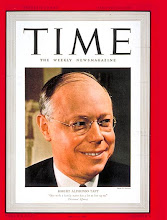

 Posts
Posts


