Showing posts with label neoconservatives. Show all posts

Wednesday, March 16, 2011

A Serious Tea Party


Under discussion: The Tea Party Goes to Washington by Rand Paul with Jack Hunter, 272 pages, $21.99, Hardcover.
What is the Tea Party? Is it the refashioned conservative movement? Is it the reaction to a new liberal Democratic president? Or worst of all, is the Tea Party just a bunch of astroturfing-Fox News-watching-racist rednecks? In The Tea Party Goes to Washington, Kentucky senator Rand Paul begins to give us an answer.

The Tea Party, according to Senator Paul, is a reaction to the big spending of Washington and a desire to curtail the power of the federal government. The trouble, or virtue, of a movement without a central hierarchy is that there is no unified message or platform. There have been a few attempts to present an official Tea Party message but A Tea Party Manifesto and That’s No Angry Mob – That’s My Mom are mostly relegated to the bargain shelf at Borders.

If there is a difference between earlier attempts at a Tea Party synthesis and Rand Paul’s it's that the current volume is attached to the platform of a victorious candidate. Since winning, Marco Rubio has shunned the Tea Party label he rode to election, exposing himself as the Bush family agent that he always was, while Tea Party losers Joe Miller, Christine O’Donnell, and Sharron Angle are already largely forgotten. So without the competing versions, the Rand Paul incarnation of the Tea Party shines brighter. And considering the contents of The Tea Party Goes to Washington, it’s sure to ruffle the feathers of anyone who would like to see the Tea Party either go away or be co-opted by the Republican Party altogether.

A note is needed first on the aesthetics of the book. The cover art depicts the Capitol Dome being squeezed by a belt, indicative of the diet Washington needs. But what’s most intriguing about the cover is what’s not there: a picture of the author himself. Mitt Romney, Sarah Palin, Mike Huckabee, and Newt Gingrich – all presidential contenders – all adorn the covers of their books.
Nor is this unique to politicians. Talk show hosts Mark Levin, Sean Hannity, Keith Olbermann, and Chris Matthews all have their mugs defacing the covers of their books. This is no coincidence. Most of the people hawking books are not actually interested in ideas but only in advancing themselves. Will someone tell me what would be the primary difference between a Huckabee candidacy and a Romney one? What’s in Sean Hannity’s book that’s not in Mark Levin’s? The difference is only in personality and style. The fact that Senator Paul is absent from the front cover (although not the back where he is pictured with his smiling wife) indicates that the book is more about his ideas than about himself personally.

The book itself is charming because it is part autobiography and part agenda. Facing the first page of every chapter is a photo, including pictures from the senator’s childhood as Ron Paul’s son and several with his own family from the campaign trail. While these images and stories from the campaign and his life are affectionate and reinforce the already-present human side of Rand Paul, the most lasting impression in the book is how radical it is. Radical not in the sense that the senator should fear being dragged before Peter King’s inquisition, but radical in how there are real ideas in the book and not shallow talking points.

This radicalism is evident even before the first page of the text. Rand Paul’s selection of a co-author is Jack Hunter, a so-far obscure South Carolina columnist and radio commentator known to many by his alias, The Southern Avenger. This choice of co-author is remarkable because Hunter, a veteran of both the Ron Paul Revolution and the Buchanan Brigades, proto-Tea Party movements, had, like Rand Paul, also never written a book. It is not for nothing that Rand Paul’s collaborator was not an accomplished ghost writer but an authentic voice of the grassroots Right.

The fingerprints of the co-author are everywhere to be found. Chapter 3, “Equal Parts Chastisement, Republicans and Democrats” is vintage Jack Hunter, including a brief introduction to the neoconservatives and treatment of Fred Barnes’ sycophantic 2003 Wall Street Journal article “Big Government Conservatism” where the Weekly Standard veteran condoned and justified George W. Bush’s growth of government. Rand Paul sees the disconnect among Republicans who took this sort of blind eye to the Republican Bush’s growth but are enraged by the Democrat Obama’s growth. “Consider this – what kind of person would talk about how badly the neighbors’ kids behave while ignoring the bad behavior of their own children?” (62) is a phrase Mr. Hunter’s listeners have heard a time or two.

Not to be outdone, Rand Paul reminds Democrats that they are just as guilty of looking the other way when their man does the same crime:

“Contrary to his supporters’ belief, Obama’s agenda has not been a reversal of Bush’s agenda but an extension of it, only more ambitious in scope and even more reckless in spending. Amazingly, and perhaps ironically, even on the issues that once animated the Left against the Republicans – prolonged war, civil liberties infringements, the further empowerment of the executive branch – Obama has basically maintained the same policies as his predecessor, and in some cases has expanded them.” (59)

And this was before Obama reinstituted indefinite detention at Guantanamo Bay. One wonders if waterboarding will be next.

But nowhere is the radicalism more evident than in Chapter 7, “A Conservative Foreign Policy,” and nowhere else is it more evident that Rand Paul is indeed his father’s son.

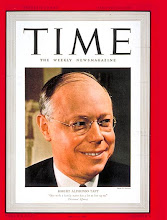
In this important chapter, the reader is treated to discussions of the neoconservative influence on foreign policy, the long-forgotten Senator Robert Taft, and a call to end nation-building.

Outside of the often insular conservative movement, there is scant attention or even acknowledgement of the existence of the neoconservatives and to find a discussion of this sect of interlopers in a U.S. senator’s book is more than just a breath of fresh air – it is a torrent, especially when there are phrases peppered in like “a Republican Party tainted by neoconservative ideology.”

The importance of the issues discussed in this chapter have been brought up before in Ron Paul’s books and more academic treatises, but the blessing in Rand Paul’s book is that he makes arguments that got his father booed without incurring the same wrath himself. In other words, Rand Paul takes foreign policy, an issue on which there was no allowable dissent during the Bush years, and presents it in a way that can be accepted by conservatives:

“The great irony is that conservatives preach individual responsibility and reliance domestically but practice policies abroad that create dependence on foreign aid and dependence on foreign soldiers. Where conservatives will ask the domestically unemployed to seek work and become independent of government welfare, abroad we let nations depend on our succor. We don’t demand the same self-reliance internationally that we do domestically.” (131-132)

If there are a couple of faults with The Tea Party Goes to Washington they have to do with the frequent references to his father. Littered throughout the text are phrases like “My father always says . . .” or “My dad believes . . .” but these are only slightly distracting. This is not necessarily Rand Paul’s fault – it just proves he came from a stable home and his father was obviously around enough to influence him – but this may expose the younger Paul to criticism among the uneducated that he is just a clone of his father.

There were also a couple of minor historical errors regarding years. On page 144, Gerald Ford is referred to as the moderate candidate for president in 1974, the year Ford ascended to the presidency, not the year he was a candidate for president, which was 1976. Then on page 154, Neville Chamberlain is said to have signed a peace treaty with Germany in 1939, the “appeasement” of Hitler. The author is probably thinking about the Munich Agreement which was in 1938.
The Tea Party Goes to Washington, with over four pages of recommended books and websites at the end, is undeniably a book about not just ideas, but fresh ideas. The Republican establishment did its best to wall Rand Paul out of the U.S. Senate during the 2010 primary, in much the same way they did to his father at the 2008 Republican National Convention, a sleight that does not go unnoticed by the son.
It's easy to see why.

Wednesday, June 2, 2010

We Have an Israel Problem

This Memorial Day weekend, while most Americans were preparing for backyard barbecues and mattress sales, and even a few remembering our war dead, a now-worldwide incident unfolded where the Israeli Defense Force boarded a humanitarian flotilla destined for a blockaded Gaza, captured the crew and killed perhaps sixteen people in the process.

The international reaction to this incident has indeed been one of furor.

Italian Foreign Minister Franco Frattini called the killing of civilians “a grave act.” The German government issued a statement saying that Israel must consider “proportionality” regarding its own self-defense while the Norwegian Prime Minister called for an end to the blockade of Gaza. (Source: Yahoo News)

Over here, commentators on both sides of the aisle are tripping over themselves in an ugly farce trying to justify Israel’s actions.

Marty Peretz at the reliably liberal New Republic tries to convince us that “The Facts are on Israel’s Side.”

On David Horowitz’s Newsreal blog, which never misses an opportunity to confuse Tel Aviv for the capital of the United States, the proprietor shamelessly called the people on the flotilla “armed jihadists” without a single reputable attribution to support his loaded claim and despite video footage showing that the passengers, at best, had makeshift weapons with which to defend themselves against armed Israeli soldiers boarding their ship. Apparently neoconservatives like Horowitz believe Turks armed with metal rods are a genuine threat to professionally-trained soldiers with automatic weapons.

Over at National Review Online, Victor Davis Hanson imitated an Israeli press secretary thusly,

“The fallout from Sharon’s visit to the Temple Mount, the distortions around the 2002 terrorist storming of the Church of Nativity, the 2006 Lebanon war — over time, these incidents do their part, in weird fashion, to incur hatred for a liberal democracy while creating sympathy for a theocratic thugocracy like Hamas.”

A simpler way to look at it is if Larry King, who is currently going through his seventh divorce, defiantly exclaimed on television, “Cheat on half a dozen wives and suddenly you get a reputation as an adulterer.”

So what does all this mean?

The very fact that this incident is such an issue in the United States demonstrates that we have an Israel problem.

Can anyone identify the vital U.S. national interest in the eastern Mediterranean?

Israeli Prime Minister Benjamin Netanyahu is all over American television defending the IDF’s actions calling it “self-defense.” That is to be expected.

But why are Americans like Victor Davis Hanson exercising every benefit of the doubt for a foreign government? The Obama White House, which has sycophantically stated that there will be no “daylight between the U.S. and Israel,” is probably wondering how to get that sort of treatment.

The problem is not whether Israel is right or wrong in disputes like these but that we defend and subsidize Israel in disputes that are none of our business in the first place.

And just what can the world expect in response?

Even if Hamas had nothing to do with this flotilla, does any rational thinker believe they will let this incident pass and not use it to increase their pressure on the Jewish state? Even new British Prime Minister David Cameron notes how the blockade and attack on this flotilla only strengthens Hamas’ grip on the besieged Palestinians.

Ardent Israel defenders in this country should set aside their hysteria to consider just one fact: Israel may have numerous enemies, but she is not weak.

Even if every exaggerated nightmare about Israel’s plight was true, their actions over the weekend, in their 2006 war in Lebanon, and the 2008 war in Gaza have demonstrated to the world that they are capable of defending themselves with relative ease.

Nor has this incident provided any real discomfort or danger for any American (except perhaps one American who is suspected to have been on the flotilla).

Moreover, Israel brings so much of this on herself.

For a country constantly claiming to be struggling in an anti-Semitic world, someone ought to ask why Israel insists on behaving in such a way that creates more resentment than security. Is this not making Israel’s enemies our enemies?

Perhaps it is time for some brave soul in Washington to ask, “What are we getting out of this relationship?”

Thursday, January 29, 2009

Iranian Pipsqueaks

On occasion, this blog has taken intellectual swipes and partisan shots at Mr. Clifford May, the director of the Foundation for the Defense of Democracies, a neoconservative think tank whose main objective seems to be drumming up an imaginary threat that the country of Iran poses not only to the West but the whole world. That is the topic of Mr. May’s essay for January 29, which readers may read for themselves here, while I take it upon myself to address his points.

In this particular bromide, Cliff May rambles about how terrible it is that the Iranian Revolution can celebrate its 30th anniversary this year. While that may not be something worth celebrating for anyone in our hemisphere, May’s piece is worth reading because in his rationale, one can find all the reasons for exactly why there does not need to be a war with Iran.

First, May cannot stop talking about the dangers the Iranian regime presents to the West, i.e. Israel and the United States. But his article begins by reminding the readers that it has been 30 years since the U.S.-installed shah was deposed. Why, in 30 years of supposed wrangling with the U.S., have they made zero verifiable or substantial threats toward us (hostages held in their country and one mention by a figurehead president with no army, air force, or nuclear weapons, of wiping the United States off the map do not count as real threats)? 30 years of avoiding war with a supposed enemy is a success that borders on the Cold War success of not fighting Soviet Russia if one wants my opinion.

Next, the author attempts to drum up fear in the reader by telling them that the revolutionary leader, the Ayatollah Khomeini, wanted to install a Muslim heaven-on-earth by organizing a jihad against the West because of their power, laws, freedoms, and decadence. The call went nowhere. Once the reviled shah was gone, there was nothing left to keep the revolutionary factions together and so, the jihad could not get off the ground.

Mr. May cites Iran’s proxies Hezbollah, Syria, and Hamas as evidence that the regime is dangerous. He obviously regards their financial banking of Hezbollah and Hamas as proof that they cannot be tolerated. Yet, both of those terrorist organization are fundamentally weak.

Israel, in 2006 in their war in Lebanon and their recent war in Gaza, utterly blew their opponents away. In the recent conflict, Israel inflicted casualties over 100-to-1 and in spite of that, we are supposed to believe that Iran is an existential threat. If that is what we are told is an “existential threat,” then we certainly have nothing to worry about regarding Iran’s ability to be a menace outside its own borders. Israel was the big military winner in both conflicts.

Then a staple of Mr. May’s writings comes forth: unless something is done (war, anyone?) then Iran will be able to attempt a genocide or nuclear attack on Israel. (On a brief tangent: another staple of May’s is that questioning the wisdom of these foreign ventures is irrational because if we don’t do what we’re doing now, then there won’t be journalists or historians in the future to second-guess these decision. Note the last line of his December 18, 2008 piece).

For Clifford May, a genocide is always right around the corner and unless something is done, poor, weak, little Israel will be facing its own existential threat. Well, in the cases of Lebanon and Gaza, Iran can provide only a paltry little sum of money to support their causes. What makes anyone think that a country without an air force or army can mount any sort of concerted attack on a country with a fast military in Israel with overwhelming firepower, as we have seen. He is right that Iran has a very few number of missiles, but that capability has been proven to be overblown.

But Clifford May stays on message right until the very end. His whole article leads up to advice for the new president who himself is sounding a lot like the old one on how the world “cannot allow Iran to get a nuclear weapon. . . . And I will do everything that’s required to prevent it.” It is Mr. May’s advice that there needs to be a war in Iran. No, he does not come out and say those exact words, but he says that the new administration “still has time to limit its final death toll.”

If the war and occupation of Iraq proves anything, it is that even more deaths can result through a well-intentioned occupation than from the original regime that was deemed to evil to be allowed to exist. So he admits that yes, the regime in Iran is terrible, but military action would stop those deaths. News flash: Even more people die when there is military action, Clifford.

Also evident in the “there is still time” line is his presentation to us of a ticking time bomb scenario. Iran is fast on its way to having a nuclear bomb, he clamors. This alone is suspect. Approximations range from the National Intelligence Estimate which declared that Iran abandoned its nuclear program in 2003 but for people who want more rationale for war with the destitute nation, there are places like the International Institute for Strategic Studies that claims Iran could have the bomb by the end of this year.

There are still too many unknowns to make a case for war, but Clifford May and his ilk are determined to get another war.

In addition to preventing them from obtaining a nuclear weapon (which, at the very least, means intervening in the internal affairs of a sovereign nation, something we would certainly object to), Mr. May encourages President Obama to make good on his desire to place an embargo on incoming oil to Iran as well as telling the new president to tell the Iranian people that their rulers are the reason for their misery. I may be some crazy, right-wing, antiwar loon, but I have a hunch that if an embargo is placed on an already starving Third World nation, it will only empower the rulers, especially when the people know for certain that some of their misery can be traced back to the Americans.

And there you have a brief commentary and dissection of the writing of Clifford May: neoconservative, warmonger, and rouser.

There are a lot of items of America’s foreign policy plate right now: working on a way to get out of Iraq sooner than 2011, the doubling of the number of American troops in Afghanistan, and launching air strikes into Pakistan. If we wish to avoid another unnecessary war, step number one should involve identifying countries that have made actual threats or strikes at us and ignoring people like Clifford May.

Monday, January 19, 2009

Dubya's Swan Song

Now in the final hours of his administration, President George W. Bush seems to be receiving some final well-wishes, even from many of his harshest critics while his few remaining supporters seem intent on supporting him blindly while seemingly refusing to acknowledge his deficiencies. So ends the odd and sometimes insuffrable Bush years.

The failure of the administration of the 43rd president is not that he invaded Iraq, was apparently asleep at the wheel when Hurricane Katrina hit, sided with Ted Kennedy on education and immigration, flubbed his initial Supreme Court choice of Harriet Miers, or grew government at LBJ speeds. It was all of this that derailed him. It was the liberalism of the first Republican president of the 21st century that caused his failure.

The conservatism embodied in Barry Goldwater and Ronald Reagan died during the past eight years. It was not merely that the president was liberal when we thought he was conservative, but he had legions of followers on the Right who followed him too blindly. After an election where conservatives and Republicans bemoaned the cult of personality surrounding our incoming president, we should be reminded that an idol was made out of the most recent occupant of the office. Conservatives followed a failed president off the cliff. The wreckage lies at the bottom.

Despite all that, even his biggest mistake, Iraq, is not uniquely Mr. Bush’s fault. His enablers came from both parties. Democrats and Republicans to this day continue to funnel American tax dollars into a Middle Eastern black hole.

Many people (yes, liberals) desired to see Saddam Hussein deposed but only when a humanitarian war went south did they begin to denounce it. The war of national security to remove weapons of mass destruction, that likely existed at one time, became a war of ideology (democracy) and a clash of civilizations. I have stubbornly clung to the belief that the President did not lie in making his case to the nation about the war with Iraq (in fact, I have far more contempt for the neoconservative advisors who, like they did for many others, duped the president about the threat of Hussein‘s Iraq), but regret his refusal to correct an obvious mistake.

Some of the remaining supporters of the president are taking these final hours to harangue his critics who gave him nothing but grief from the very beginning. External obstacles, by and large, did not ruin the presidency of Mr. Bush. It was mainly the ones he set for himself: Iraq, the bureaucratic nightmare of Katrina, his incompetent presiding over a corrupt party, that is what made George W. Bush a failed president and a tragic historical figure.

There is little doubt that George W. Bush’s time in office will be judged by his decision to go to war in Iraq. He will be fortunate if the economy turns around and the recession manages to avoid becoming a depression as the plummeting economy is considered by many to be the final tragic legacy Mr. Bush is leaving to his country.

It was his liberalism that ruined the president’s two terms. Even though Mr. Bush’s successor promises to be different, he appears poised to keep doing more of the same. Instead of Iraq, Mr. Obama will ratchet up the American presence in Afghanistan, a country perhaps impossible to pacify, that could ruin his presidency as the former country ruined Mr. Bush’s. The government grew at an alarming rate under this Republican president and the incoming Democratic president, with stronger majorities than his predecessor ever had, is prepared to explode the government to new and more invasive depths. Did we really learn nothing from the Bush years?

These last few days have filled me with regret. It serves little purpose now to get angry with George W. Bush. After all that has happened over the past eight years, I feel a little sorry for him. Yes, he has been a failed president, but his failure was not inevitable. If he had kept his 2000 campaign pledge of a humble foreign policy and kept his promise to get government out of the people’s way, he would have avoided some of these massive disasters.

Alas, it was not. History is not written by what could have been or what should have been, but what was, and the 43rd president was as an abject failure. Mr. Bush leaves the White House tomorrow and returns home to Texas, which is a site I believe everyone, including the president himself, is happy to see.

Goodbye, Mr. President.

Wednesday, October 29, 2008

A Neoconservative Carol

If someone locates my facebook profile, they will find a list of movies that includes "Airplane!" and the highly popular "Naked Gun" trilogy, all by the famous brothers Jerry and David Zucker. The classic spoofs have mocked movies and popular culture to my delight for years. This year, David Zucker, having had a political conversion of sorts, made a movie all neoconservatives and fervent war supporters are sure to love, “An American Carol.”

Responding to left-wing antiwar movies “Rendition” and “Redacted” that American soldiers were nothing more than murderers and that the whole War on Terror is nothing more than a crock, “An American Carol” sets to portray American soldiers as noble warriors volunteering out of selfless service to country and a burning obligation to defend freedom.

Kevin Farley, a lovable blob like his late brother, plays the fictitious Michael Malone, a character obviously based on socialist filmmaker Michael Moore, and a character whose only ambition is to see the United States dismantled. Kelsey Grammer breaks out of his Frasier Crane role to play the ghost of General George S. Patton. Through his airy portrayal, the audience is expected to believe that the dead Patton is even more “all-war all-the-time” than the live one. Together, the odd couple travels through history, a la “A Christmas Carol” to see how war has been used for good.

The central message of the movie seems to be that all wars are good as long as they are waged by the United States. In it, there is a sophomoric re-enactment of the infamous Munich peace conference of 1938 where that blundering idiot of a British prime minister Neville Chamberlain signed over the Sudetenland to Hitler, thus sealing the West’s fate by helping the Austrian corporal launch World War II. This comic book version of the events of 1938 is enhanced by the presence of the Japanese at the European peace conference, presupposing that like all wars, the nefarious henchmen are all united against everything that is good and free, i.e. the United States. It reminds one of President Bush’s now-infamous “Axis of Evil” speech in 2002, where he named Iran, Iraq, and North Korea as state sponsors of terror determined to threaten the United States, as if they were all united in a 3-headed monster of evil.

Back to the fake Munich: the point of this charade was to tell the audience that even talking to a potential adversary is tantamount to surrender, a classic neoconservative argument. And if you talk to that opponent, then expect them to become a genocidal maniac who will wage war on as many continents as possible.

On a note of history, the British probably could not have cared less whether ethnic Germans living in Czechoslovakia lived under German rule or Czech. The Munich conference was anti-climactic: war in Europe was probably already an inevitability once Hitler remilitarized the Rhineland in 1935 with no resistance, not when the Czech Germans were signed over to Hitler. And if anyone cares, the Japanese were thousands of miles from Munich.

Just as ludicrous was the characters' trip to a southern plantation where, in a world where there had been no Civil War, slavery still existed and the South’s “peculiar institution” still thrived. Never mind the fact that slavery vanished everywhere else in the West through gradual emancipation, not through bloody wars. The audience is supposed to believe that despite all the modernization and industrialization of the North, chained humans would be still be picking cotton to this day. Here is where the neocons’ undying devotion to Lincoln shines through: the ill of slavery could only be accomplished by war and no one can question the methods Lincoln used to bring them about. Today, the neocons impress upon the country that the president has unquestionable authority to fight terrorists and that the only way to defeat a network of terrorists not tied to a country is to invade and make war on countries we don’t like.

But perhaps the most unconscionable scene of the movie was a group of soldiers about to be deployed, who were all praying. I do not contest a soldier’s right to pray, but the scene presupposes that American soldiers are on a divinely ordained mission to bring democracy to the Middle East. They may as well have opened up the Bible and said that salvation comes through the United States.

The prayer scene also smacks of emptiness because in it, the soldiers are supposedly praying for their own protection in battle. But in war, there is an unavoidable atrocity known as “collateral damage,” which is what happens when unintended targets, oftentimes civilians, get caught in the bombing of a strategic target. It is unfortunate and every war has to deal with it. What is unconscionable is the indifference many in our country have for it. Many Christians in this country think of our country’s venture into Iraq as a divine mission or that George W. Bush was ordained to become our president. War is a spiritual experience in this flick which is unsurprising since war is the chief article of the neoconservative faith. If there should be any praying done in war, my unsolicited opinion suggests it should be for its speedy conclusion, for one’s own protection, and for the protection of innocents. It rings hollow when Christians wail over the atrocity of abortion but are strangely silent when fellow innocents unjustly die in war.

Regarding all this cynicism spewing from my keyboard, someone might be wondering, why all this fuss over a movie? The Zuckers’ lampooned airplane disaster movies in the early 1980’s to the delight of many. Why is this movie any different? It is different because the issue of the movie is an always hot political topic: war. The other Zucker movies have been light-hearted and even a little political. In the second “Naked Gun” movie (“Naked Gun 2 ½: The Smell of Fear) President George H. W. Bush is portrayed as a bumbling fool and all the surrounding special interest groups are only concerned with destroying the environment. Since the early 1990’s, David Zucker has had some sort of conversion to the mainstream Right where war is the only answer.

There is still some slapstick humor, but it is forced and it gets clouded over by the political tones. The other Zucker movies are completely unserious and are a distraction from the trials of reality. Therefore it made laughing at this movie a little more strained because it took the matter of war so lightly. Yes, it was still a moderately funny movie but not the side-splitting one expects from previous Zucker flicks.

In this blog, much has been written about neoconservatives, their glorification of war, and their constant need for it. There are books one could read about neoconservatives, but watching “An American Carol” is a good introduction to the propaganda of their worldview without all of the hassle of actually reading.